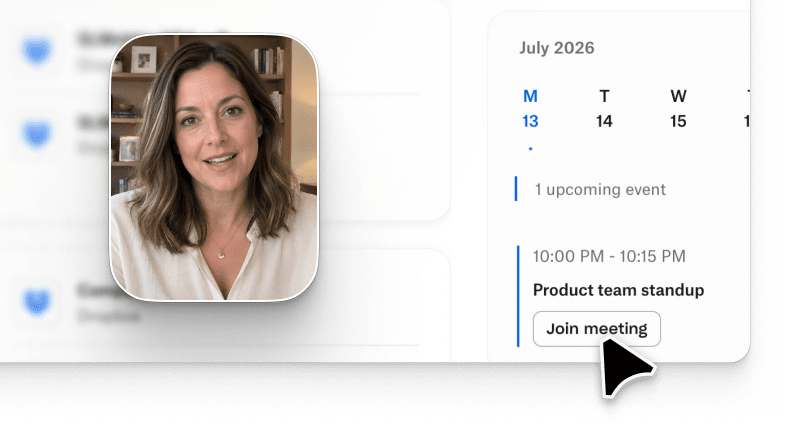
Sales enablement content is any asset that helps reps sell more effectively: battlecards, demo videos, one-pagers, case studies, ROI calculators, and interactive product demos. The problem is that most of it goes unused. Forrester estimates that 60-70% of marketing-created sales content goes untouched because reps cannot find it, and the Salesforce State of Sales Report shows that high-performing reps consistently rely on shareable, link-based assets over PDFs. In Gartner's April 2026 research, VP Analyst Shayne Jackson noted that AI-driven enablement is projected to deliver 40% faster sales stage velocity by 2029, urging sales orgs to "move beyond static content and training to deliver in-workflow, data-driven guidance." Interactive demos are at the center of that shift. Arcade's interactive demos are the format changing the equation: Zapier saw 70% more meetings booked when reps used Arcade's interactive demos as leave-behinds instead of static PDFs.
This guide covers which sales enablement content formats actually get used by reps, why most content fails, and how to build an enablement library that drives pipeline instead of gathering dust.
Quick Answer: Sales Enablement Content That Reps Actually Use
The 60-70% waste rate exists because most enablement content is built for the wrong moment, in the wrong format, by the wrong team. Three structural problems show up in nearly every B2B organization:
The content is hard to find. Revenue teams burn an estimated 440 hours per year searching for or recreating assets buried in shared drives. According to Seismic's State of AI in Enablement Report, 83% of GTM leaders agree that aligning AI with GTM strategy leads to revenue growth, yet most organizations still rely on manual content discovery. If a rep can't find the right battlecard in 30 seconds during a live call, it doesn't exist.
The content is built for marketing, not for sales. Marketing teams create beautiful PDFs, polished case studies, and branded one-pagers. Reps need content that works in the moment: a quick comparison they can pull up mid-call, a demo they can send 5 minutes after discovery, a proof point they can drop into a Slack thread with a champion. Format matters more than polish.
The content goes stale. Competitive landscapes shift monthly. Pricing changes quarterly. Feature launches happen continuously. A battlecard from 6 months ago is a liability, not an asset. According to Klue's research on competitive battlecards, the best sales teams refresh competitive content on a weekly cadence, not quarterly.
The sales enablement content formats that get used share three traits: they're fast to consume (under 2 minutes), easy to share (a link, not an attachment), and self-evident (no explanation needed). Here's how the main formats rank by actual rep adoption:
Interactive demos are the highest-engagement sales enablement format in 2026. Unlike static PDFs or recorded videos, interactive demos let the prospect click through the product at their own pace. Reps send them as leave-behinds after discovery calls, embed them in proposals, and share them with buying committee members who weren't on the original call.
Arcade's interactive demos are built for this exact workflow. Screen recordings captured via Chrome extension, desktop app, or Figma plugin become shareable interactive experiences with hotspots, callouts, chapters, and analytics. Arcade's Creator Studio then turns those same recordings into polished video demos with AI voiceover (Avery) for LinkedIn, email, and social.
Customer results that prove the format works for sales enablement specifically:
More than 30,000 companies use Arcade including OpenAI, Salesforce, Red Hat, and Zapier.
Why reps use this format: the analytics show exactly which prospect clicked which section, how long they spent, and where they dropped off. That's follow-up intelligence, not just content delivery.
Battlecards remain the most-requested sales enablement content type from product marketing teams. The shift in 2026: static PDF battlecards are dying. The best teams now use living battlecards that are modular, searchable, and updated weekly rather than quarterly.
A battlecard that works mid-call has these traits:
The combination of a battlecard + an interactive demo is the highest-converting competitive enablement pairing. The battlecard gives the rep the talking points, the demo gives the prospect the proof.
The window after a discovery call or demo is the highest-intent moment in the sales cycle. What a rep sends in the first 60 minutes after a call determines whether the deal moves forward or stalls. The most effective demo follow-up content in 2026:
Reps use case studies when they map to the prospect's industry, company size, or use case. Generic case studies ("Company X saw 300% improvement") get ignored. Effective case studies in a sales enablement context are:
Playbooks work when they're structured around the sales process (discovery, demo, proposal, negotiation) rather than organized by product feature. The best sales enablement playbooks in 2026 include embedded demo links at each stage: a discovery demo that shows "before and after," a technical demo for the security review, and a champion demo the internal sponsor can present to their leadership.
Building the library is the easy part. Getting reps to use it is the hard part. According to Highspot's definitive guide to sales enablement, 43% of sales enablement tools are underutilized with adoption rates below 50%. The problem is almost never the content quality. It's the access pattern.
Step 1: Organize by sales stage, not by content type.
Reps think in stages (discovery, demo, proposal, close), not in formats (battlecard, one-pager, case study). If your library is organized by format, reps have to translate "I need something for the technical evaluation stage" into "I should look in the battlecards folder." That translation step kills adoption.
Step 2: Make every asset shareable as a link, not a download.
Attachments get blocked by email filters, buried in download folders, and stripped of tracking. Links (especially interactive demo links from tools like Arcade) are trackable, forwardable, and always up to date. The analytics from link-based content tell you who opened it, how long they spent, and what they clicked, which is follow-up intelligence.
Step 3: Build the content reps already ask for, not what marketing wants to create.
Survey your top 5 reps. Ask: "What do you wish you had for the discovery call? For the demo follow-up? For the security review? For the champion presentation?" Build those 4 assets first. Everything else comes later.
Step 4: Refresh competitive content on a weekly cadence.
The Klue competitive intelligence research shows that the best competitive programs refresh battlecards weekly, not quarterly. Stale competitive content is worse than no competitive content because it creates false confidence.
Step 5: Embed demos directly into the enablement workflow.
Interactive demos from Arcade integrate into the tools reps already use: email sequences (Outreach, Salesloft), CRM (Salesforce, HubSpot), and Slack. Reps don't have to leave their workflow to find and share a demo. The demo is already in the sequence template, the CRM activity, or the Slack channel.
Step 6: Track usage and iterate.
If you're only measuring content views without tying them to deal outcomes, you're measuring activity instead of impact.
The sales enablement tools landscape has expanded significantly. Gartner's April 2026 research, covered by Communications Today and others, projects that AI-driven enablement will deliver 40% faster sales velocity by 2029, signaling how fast the category is moving. The core stack most high-performing teams run, ranked by how much it actually changes rep behavior:
The sales enablement platform category is projected to be a multi-billion dollar market. But the tool stack matters less than the content strategy. A team with great content in a mediocre tool will outperform a team with mediocre content in a great tool, every time.
The metrics that prove sales enablement content is working go beyond "how many times was this asset viewed." The measurement framework that connects content to revenue:
The Salesforce State of Sales Report tracks how high-performing sales orgs measure enablement: content adoption rate, quota attainment, win rate, revenue contribution, and sales cycle length are the consistent five. If your measurement framework doesn't include at least three of these, you're likely measuring activity rather than impact.
The best sales enablement libraries are organized by deal stage, with specific content mapped to each moment in the buyer's journey:
Discovery stage: Interactive demos that show "before and after" for the prospect's specific pain point. One-pagers tailored to the prospect's industry. Talk tracks for common objection patterns.
Demo / evaluation stage: Personalized interactive demos built for the specific use case discussed. Technical documentation for security and IT review. Competitive battlecards for the vendors the prospect is also evaluating.
Proposal stage: ROI calculators with the prospect's own numbers. Case studies from similar companies (matched by industry, size, or use case). Champion decks the internal sponsor can present to their leadership.
Negotiation / close stage: Pricing comparison sheets. Implementation timeline templates. Executive summary one-pagers for the final sign-off stakeholder who hasn't been in prior conversations.
Post-sale onboarding: Interactive product tours for the new user's team. Training demos for specific workflows. Quick-start guides the customer success team can share in the first week.
At every stage, the format that gets the highest engagement is the one that lets the prospect interact with the product directly. That's why interactive demos from tools like Arcade have become the backbone of modern sales enablement content: they work at every stage, they're shareable as a link, they provide analytics, and they always show the current version of the product.
Sales enablement content is any asset that helps sales reps sell more effectively. This includes interactive product demos, competitive battlecards, case studies, one-pagers, ROI calculators, sales playbooks, talk tracks, and demo follow-up materials. The best sales enablement content is organized by deal stage, shareable as a link, and tracked for usage and impact.
The core sales enablement tools stack in 2026 includes an interactive demo platform (Arcade), a content management platform (Highspot, Seismic, or Showpad), competitive intelligence (Klue or Crayon), sales engagement (Outreach or Salesloft), and a CRM (Salesforce or HubSpot). Arcade is the sales enablement platform for interactive product demos, with a free plan including 3 demos, 200 AI credits, and AI voiceover.
A sales enablement framework is a structured approach to creating, organizing, distributing, and measuring content across the sales cycle. The most effective frameworks organize content by deal stage (discovery, demo, proposal, negotiation, onboarding) rather than by content type, and include metrics for adoption, deal velocity, and revenue impact.
The most effective sales enablement examples in 2026 include interactive product demos (sent as leave-behinds after calls), competitive battlecards (one-screen format, updated weekly), personalized one-pagers (tailored by industry and use case), ROI calculators, champion presentation decks, and demo follow-up sequences that include interactive demos. Zapier increased meetings booked by 70% using Arcade interactive demo leave-behinds.
Reps use sales enablement materials that are fast to consume (under 2 minutes), easy to share (a link, not an attachment), and self-evident (no explanation needed). Interactive demos, competitive battlecards, and personalized one-pagers rank highest for actual rep adoption. Content that requires downloading, scrolling, or context-setting consistently underperforms.
Measure sales enablement content by tying it to deal outcomes: content adoption rate (% of reps using each asset), content-to-meeting conversion (% of recipients who book follow-up), deal velocity impact (time to close with vs without enablement content), and win rate impact. Teams with sales enablement hit 49% win rates vs 42.5% without, according to Highspot research.
Sales enablement provides reps with the content, tools, and intelligence they need to engage buyers at each deal stage. Sales training teaches reps skills and methodologies. Both matter, but enablement is ongoing and deal-specific (every conversation needs different content), while training is periodic and skill-specific (objection handling, discovery technique, negotiation). The best programs integrate both: training teaches the methodology, enablement provides the assets to execute it.
Sales enablement content is built for reps to use in active deals (battlecards, demo follow-ups, ROI calculators, champion decks). Marketing content is built for buyers to find at the top and middle of the funnel (blog posts, ebooks, webinars, comparison guides). The same source material can power both: a customer case study lives on the marketing site as a top-of-funnel asset and inside the sales enablement library as a tagged proof point reps share at the proposal stage. The format and tagging change, the underlying story does not.