.jpg)
By JJ Xia, Head of Product Marketing at Arcade
My last manager, Kyle Christensen, started his career as a product marketing manager at Salesforce. At the time – long before it became a giant bursting at the seams with different products – Salesforce was still known primarily as a sales CRM. Kyle was a PMM early on. In fact, he was the PMM who first launched Service Cloud in 2009.
As Kyle tells the story, the concept of Service Cloud was pulled together from totally different product lines. Cases, Phone, and Chat were all in the core "customer service" bucket, but it was grouped together with other products like a new Facebook connector and Salesforce Ideas. It was a complete break from how the Product teams at Salesforce were organized, and more of an outside-in view of how customer service was evolving.
That’s how Service Cloud was born.
Service Cloud is a $9B business line today.
It also directly influenced the start of my own career – my first job out of college was supporting enterprise Service Cloud implementations at Deloitte. If that product didn’t exist, I would be somewhere very different in my career today. So when I say that Kyle started the butterfly effect that ultimately shaped my career, it’s not an exaggeration.
That’s the dream for product marketers: Launch a product that actually makes a difference. Tell a story that actually changes how people behave. Make someone’s life better.
That’s the sweet spot.
But having been a product marketer for over a decade, and after interviewing hundreds of product marketers to join my teams, I can definitely say that too often, our time is spent on much more mundane things.
The Product Marketer’s Role
At its core, product marketing revolves around three responsibilities:
- Deeply understanding the customer through market research, customer interviews: The goal is to get close enough to customers to understand how they think, what they care about, and what drives their decisions. This provides the insights that drive positioning, messaging, and ultimately product strategy.
- Crafting a story that will resonate with a customer by testing pitches, and iterating on feedback: We then turn those insights into a narrative that holds up in real sales and customer conversations, and feels true to how our buyers experience their work. It's crucial the story is clear, engaging, and grounded in challenges that customers actually face.
- Producing content, videos, demos, webpages, and campaigns to showcase and amplify that story: From there, the work becomes about bringing the story to life in a way that scales across channels and teams, in collaboration with the rest of marketing. We want to create assets that are consistent, easy for GTM teams to use, and strong enough to carry the narrative across every sales and customer touchpoint.
In an ideal world, 80% of a PMM’s time is spent on the first two responsibilities, and as little as possible is spent on the third. The role of a product marketer is to be the voice of the customer for the product, and the voice of the product for the customer. That means obsessing about their target personas and ICP (Ideal Customer Profile), and working tirelessly on resonating with those audiences. They don’t work in an ivory tower – they’re out there pitching, testing, getting feedback, asking questions, learning, and then synthesizing those insights to craft the best story possible.
That’s how you invent things like Service Cloud.
What Most Product Marketers Spend Most of Their Time On
Instead of investing deeply in customer research and iterating on your story, many of today’s PMMs spend 80% of their time on #3 – creating content to support new products and needy sales teams.
And they hate it.
For years, I asked PMM candidates these two questions in every interview:
- What do you love most about product marketing?
- What is something you really do not enjoy?
The answers were remarkably consistent. People loved the discovery process, the storytelling, the synthesis. On the other hand, they strongly disliked the constant production requirements.
PMMs describe spending days editing demo videos, reworking deck layouts, updating screenshots after a UI change, rewriting copy for the fifth iteration of a landing page, or stitching together a product storyline that changes again a week later. The volume of work expands with every new feature that ships to production, every request from sales, every quarter-end launch plan, every internal sync that uncovers yet another thing that needs to be “cleaned up.”
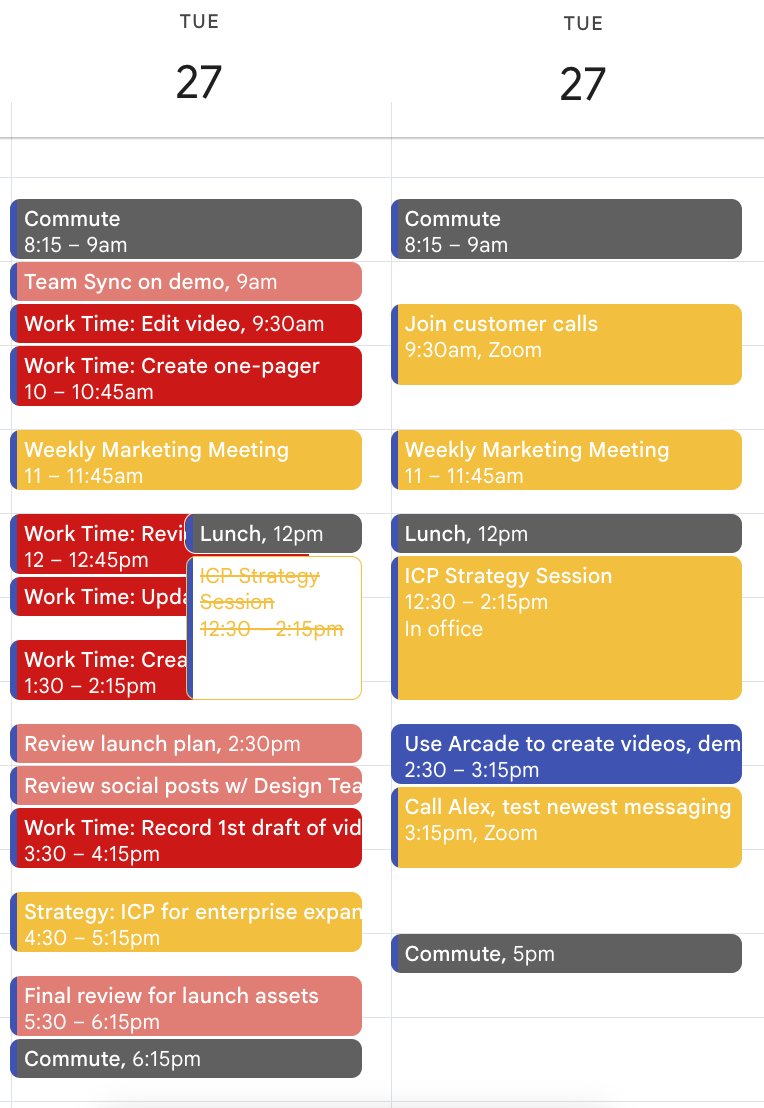
This is the reason many PMM teams feel perpetually behind: When so much of the job is consumed by content production, it feels impossible to find the time and headspace to craft and tell stories that really make messaging land.
What Separates the Good From the Great
The problem is that it’s hard to create beautiful, on-brand content that shows off your product.
I’ve seen some product marketing organizations with more than 50 PMMs where the Directors and above are crafting the story, while everyone else is just building decks, editing videos, and writing copy to keep up with all the product changes. Others rely on outside agencies to create launch videos and demos, only to spend three months and over $30,000 on a few videos that become outdated in just a few months.
The number of meetings it takes to iterate on copy and review storyboards is astounding. The amount of time a product marketer spends re-creating one story into different formats is, frankly, a waste.
Take any product launch list. We spend a little time upfront crafting the story, and then an insane amount of time turning that into 50 formats. We should be spending more time finding the right stories that will resonate, getting feedback, iterating, and constantly tweaking. So why don’t PMMs do that? Because there are only so many weeks left until launch, and there’s a laundry list of launch videos, decks, and content to get through.
But here’s the thing: those are just assets – they need to amplify the right stories to begin with. If you don’t figure out the right story that’ll resonate, the rest doesn’t matter.
No one joins the product marketing profession to work on copy – they become product marketers to work on ideas and tell impactful stories that no one has before.
Because a product marketer who can tell a story – not just regurgitate what the features are, but the story of what those features can do for you – embodies the magic of storytelling. That’s what separates an average PMM from great ones.
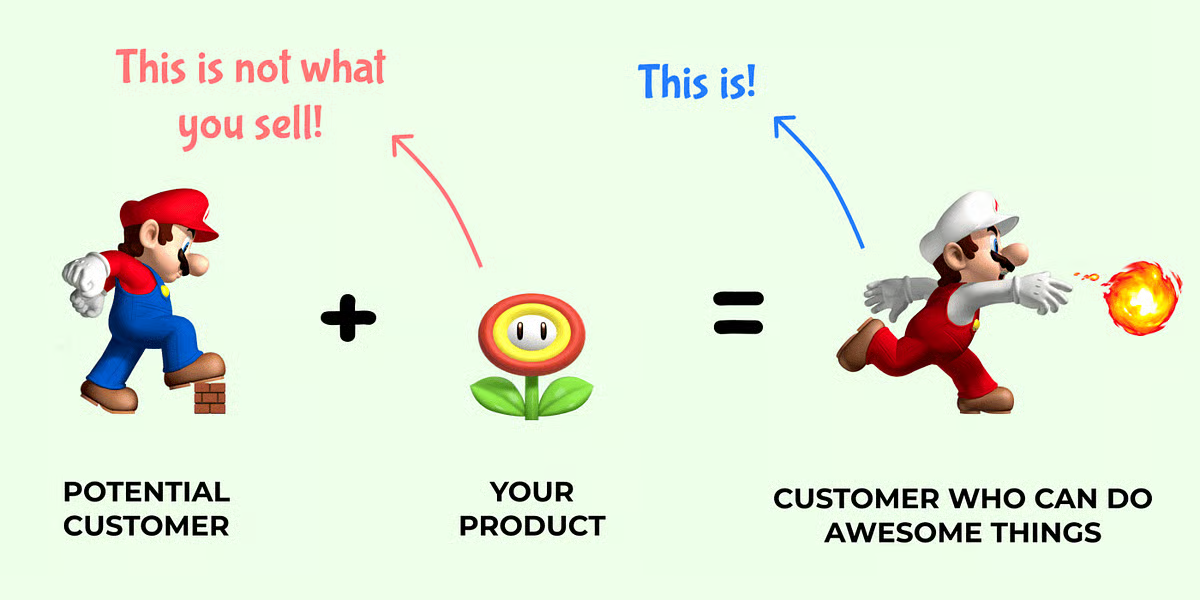
A New Era for Product Marketers: A Better Way to Create and Share Stories
When I first met the Arcade team, I already knew they had a terrific interactive demo platform that helped product marketers show off their product. But what stood out immediately was the bigger vision behind it. Arcade wasn’t created to be another tool in a PMM’s stack – it was built to help GTM teams become better storytellers, and take the operational weight of content creation off PMMs so they can focus on the work that actually moves the market.
That vision came to life with our recent launch of Creator Studio. For the first time, PMMs can create polished and always-on-brand demos, visuals, and product videos in minutes instead of weeks. The workflows that used to involve stitching together screenshots, coordinating with design, or navigating endless revision cycles can now happen in a single, streamlined experience.
Creator Studio adds to the original Arcade platform by giving teams even more of the capabilities they actually need:
- Your Brand Kit pulls relevant details from your website to become the foundation for every asset you create, ensuring everything that follows is consistent, cohesive, and unmistakably yours.
- You can create ready-to-ship product videos and visuals instantly using your actual brand and UI as the building blocks. A lot of AI tools right now for marketers start with generic templates (Canva, Synthesia, many others). This is not that.
- You can keep demos current as your product changes. Arcade updates them automatically.
Creator Studio starts from the product itself, so the output is cohesive, accurate, and immediately ready to share externally. Other tools may offer infinite flexibility, but infinite flexibility often translates to infinite work. Creator Studio delivers the right options off the bat so you can move fast and still feel proud of what you publish.
Also importantly, it’s not like the AI tools PMMs have been experimenting with. Most of them generate photorealistic or templated outputs that never quite match your brand or product. PMMs tell me all the time, “Oh I use XYZ, but only for internal decks.” Arcade is built for customer-facing content. It starts with your brand and your product, which means the output actually looks right.
For PMMs, this unlocks something critical: time. More space for the upstream work that shapes the narrative – understanding the customer, refining the message, and testing the story in real conversations.
That’s why I joined Arcade.
Building a Foundation for Better GTM Storytelling
The companies that stand out today pair strong products with stories that help customers understand why those products matter. That kind of storytelling depends on PMMs having the time and permission to think strategically. The biggest challenge right now isn’t skill or ambition. It’s that PMMs are drowning in production work that keeps them downstream instead of upstream.
By making it possible to produce high-quality, on-brand assets in minutes, Arcade reduces the content production load that has weighed PMMs down for years, and opens up space to focus on the part of the craft that makes product marketing truly impactful.
Especially in today’s job market, the PMMs with actual market, persona, and industry expertise are more valued than others.
I want product marketers to truly be an expert in the voice of the customer, and have the time to define the best stories that would resonate. If that’s the type of storytelling that matters to you, learn more about our new Creator Studio and give Arcade a try.
Share on