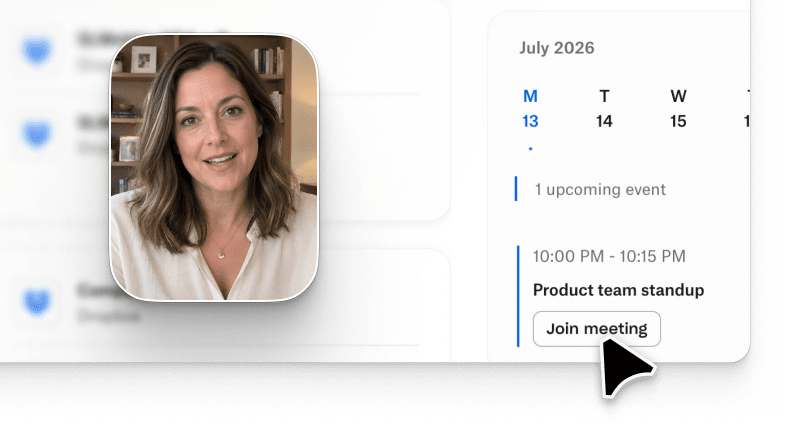
The enterprise sales cycle is the multi-month journey from first qualified meeting to signed contract for deals in the $50K+ ACV range. It spans 6-12 months on average, involves 5-10 stakeholders per deal, and is the largest source of pipeline leakage in B2B SaaS. The teams shortening their enterprise sales cycle in 2026 are doing it through three structural shifts: multi-threading earlier in the deal, replacing demo bottlenecks with Arcade's interactive demos the buying committee can share asynchronously, and instrumenting deal velocity at the stage level. Customer outcomes shared by Arcade: Zapier increased booked meetings by 70%, and RudderStack compressed sales training by 83%.
According to Gartner's B2B buying journey research, buying committees have grown to an average of 6-10 stakeholders per deal, and 77% of buyers describe their evaluation as "complex." Independent data from RAIN Group's B2B selling research shows that the most effective enterprise sales teams consistently engage 5+ stakeholders by mid-stage, and LinkedIn's State of Sales report finds multi-threaded deals close at materially higher rates than single-threaded deals across enterprise B2B. The complexity is real and it's not going away. The enterprise sales cycle is a coordination problem masquerading as a sales problem, and the teams that win treat it that way.
Quick Answer: Enterprise Sales Cycle in 2026
The enterprise sales process in 2026 has six stages, and each has its own typical duration, primary stakeholder, and stall pattern.
| Stage | Typical Duration | Primary Stakeholder | Common Stall |
|---|---|---|---|
| Discovery | 2-4 weeks | Champion / initial evaluator | No clear next step after first call |
| Technical Evaluation | 4-8 weeks | Technical buyer + end users | POC drags, demo coordination across team |
| Business Case | 3-6 weeks | Economic buyer | ROI doc requires data buyer cannot easily produce |
| Procurement and Legal | 4-12 weeks | Procurement, security, legal | Security review, redlines, vendor onboarding |
| Negotiation | 1-3 weeks | Economic buyer + procurement | Late-stage pricing pushback, scope expansion |
| Close and Implementation Handoff | 1-2 weeks | All stakeholders | Signing delays, onboarding handoff gaps |
The cumulative duration is 6-12 months. The single biggest lever for shortening it is compressing technical evaluation and business case in parallel rather than sequentially.
The enterprise sales cycle drags for predictable structural reasons, not for "the deal got cold."
Insufficient multi-threading. When the seller only has one champion, the deal stalls every time that champion gets pulled into other work. Per LinkedIn's State of Sales data, deals with three or more active stakeholders close at materially higher rates than single-threaded deals across enterprise B2B SaaS.
Demo coordination friction. Every time a new stakeholder enters the deal, sales schedules another demo. Coordinating calendars across five stakeholders adds weeks. The teams that compress this stage replace repeat demos with shareable interactive demos that stakeholders consume on their own time.
Slow business case construction. The economic buyer needs an ROI document, but the data required (usage assumptions, time savings, current cost baselines) is hard to gather. Sales teams that pre-build ROI calculators and templates compress this stage from weeks to days.
Security review bottlenecks. Enterprise security reviews can add 4-8 weeks. According to Forrester's research on B2B procurement and vendor evaluation cycles, procurement and security review now represent the longest single phase in most enterprise SaaS purchases. Teams with SOC 2, ISO 27001, and a complete vendor security questionnaire pre-built pass through faster than teams answering each question fresh.
Procurement delays. Procurement is a function with its own quarterly cadence and vendor preferences. Sellers who engage procurement early (not at the end) navigate this stage faster than those who treat procurement as a paperwork step.
Multi threading in sales is the practice of engaging multiple stakeholders within the buying account early in the deal rather than relying on a single champion. The cycle-shortening impact comes from three mechanisms, and multi-threading is now the single most-cited tactic in modern enterprise sales strategy research.
Removes single-point-of-failure risk. When the champion leaves, gets reorganized, or de-prioritizes the project, the deal does not die if other stakeholders are already engaged. LinkedIn's State of Sales research consistently shows multi-threaded deals close at materially higher rates than single-threaded deals.
Compresses internal selling. Without multi-threading, the champion has to internally sell the product to other stakeholders. With multi-threading, sellers engage stakeholders directly and reduce the internal-selling burden on the champion.
Surfaces blockers earlier. Procurement, security, and legal blockers appear in week 2 instead of week 20. The earlier these surface, the sooner the seller can address them.
The practical multi-threading playbook:
The teams that consistently multi-thread to three or more stakeholders by week 4 close enterprise deals in 4-6 months rather than 8-12 months.
Technical evaluation is the longest stage in the enterprise sales process, and the part most amenable to compression. The traditional pattern: discovery call → live demo → POC kickoff → multi-week POC → re-demo for new stakeholders → POC review → recommendation. The cycle takes 6-10 weeks because each step requires scheduling and re-demonstration.
Interactive demos compress this by replacing repeat live demos with shareable asynchronous walkthroughs.
Post-discovery follow-up. Within an hour of the first discovery call, send an interactive demo configured to the specific use cases discussed. The champion forwards it to the buying committee. The next meeting is not a re-demo, it's a working session on implementation.
Stakeholder-specific demos. Build separate interactive demo variants for the technical evaluator, the end user, and the economic buyer. Each variant emphasizes the workflow that matters to that audience. Send each variant directly to the relevant stakeholder.
POC alternative for narrow use cases. Some deals do not need a full POC if a configured interactive demo can prove the workflow. Teams that replace POCs with interactive demos for the 60% of deals where a POC was over-engineered compress cycle time significantly.
Per Arcade's customer showcases: Zapier saw 70% more meetings booked when SDRs sent interactive demo leave-behinds instead of static PDFs, and RudderStack compressed sales training time by 83% by giving reps a library of interactive demos rather than slide decks. These are vendor-shared customer results; the directional finding (shareable demo content compresses evaluation cycles) is consistent with independent research from Forrester and LinkedIn on B2B buyer self-education.
Beyond multi-threading and interactive demos, the sales cycle optimization tactics that consistently shorten sales cycle time:
Pre-built business case templates. ROI calculators with customer-specific inputs that the economic buyer can populate in 30 minutes instead of building from scratch in two weeks. The templates pull from your closed-won deal data to make the assumptions credible.
Security questionnaire library. A pre-filled response to the SOC 2 / ISO 27001 / SIG / CAIQ questionnaires that procurement and security teams can review on day one of evaluation. Removes the "we'll get back to you in three weeks" delay.
Mutual action plans (MAPs). A shared document with the buyer outlining each milestone, owner, and target date through close. MAPs convert vague "next steps" into accountable timelines and reduce slippage between stages.
Champion enablement content. A package of internal-selling materials (business case template, competitive battlecard, ROI calculator, references) that the champion uses to advocate inside the account. Champions with good enablement content shorten sales cycle time at the business-case stage by weeks.
Live deal review with stakeholder map. Weekly deal reviews where the rep walks the named buying committee map and identifies which stakeholders are warm vs cold. Surfaces stalled deals before they reach the next forecast.
You can't shorten what you don't measure. A modern enterprise sales strategy requires instrumenting stage-level velocity, not just overall cycle time.
The metrics that matter:
Teams that instrument these five metrics get a leading indicator of which deals will close in this quarter vs slip to next quarter, four to six weeks before the standard forecast captures it.
An enterprise sales cycle is the multi-month journey from first qualified meeting to signed contract for deals in the $50K+ ACV range. It typically spans 6-12 months, involves 5-10 stakeholders per deal, and includes six stages: discovery, technical evaluation, business case, procurement and legal, negotiation, and close. The cycle is longer than mid-market or SMB cycles because of the buying committee complexity and procurement requirements that define b2b enterprise sales motions.
The average enterprise sales cycle for B2B SaaS is 6-12 months, with deals in the $50K-$500K ACV range typically closing in 6-9 months and deals above $500K often running 9-18 months. The longest stages are technical evaluation (4-8 weeks) and procurement and legal (4-12 weeks). Multi-threading early and using asynchronous demo content can compress the average to 4-6 months.
Multi threading in sales is the practice of engaging multiple stakeholders within a buying account early in the deal rather than relying on a single champion. Per LinkedIn State of Sales and RAIN Group research, multi-threaded deals close at higher rates than single-threaded deals because they remove single-point-of-failure risk and surface blockers earlier in the cycle. The tactic is the single highest-leverage move in modern b2b enterprise sales.
You shorten an enterprise sales cycle through five structural changes: multi-thread to three or more stakeholders by week 4, replace repeat live demos with shareable interactive demos, pre-build ROI calculators and security questionnaire responses, use mutual action plans (MAPs) with milestone-level accountability, and instrument stage-level velocity to surface stalled deals early. Teams that adopt these tactics consistently shorten sales cycle time from 6 months to 4 months and improve forecast accuracy at the same time.
Enterprise sales strategy involves buying committees of 5-10 stakeholders, formal procurement and security reviews, and cycle times of 6-12 months. SMB sales typically involves 1-2 stakeholders, no procurement review, and cycle times of 1-4 weeks. An enterprise sales strategy requires multi-threading, account-based planning, and asynchronous demo content. SMB strategy requires speed, self-serve evaluation flow, and PLG-style activation. The two motions have different metrics, different rep profiles, and different content needs.
Enterprise deals most commonly stall between technical evaluation and business case (champion can't get internal alignment without economic buyer engagement) and during procurement and security review (vendor questionnaire takes weeks). The cycle-shortening leverage points are early multi-threading to bring the economic buyer into the deal sooner, and pre-built security and procurement content to compress vendor onboarding.
Interactive demos shorten the enterprise sales cycle by replacing repeat live demos with shareable asynchronous walkthroughs. Instead of scheduling a new demo every time a new stakeholder enters the deal, the seller sends an interactive demo configured to that stakeholder's use case. The buying committee consumes the demo on their own time, the next meeting is a working session rather than a re-demo, and the technical evaluation stage compresses from 6-10 weeks to 3-5 weeks.