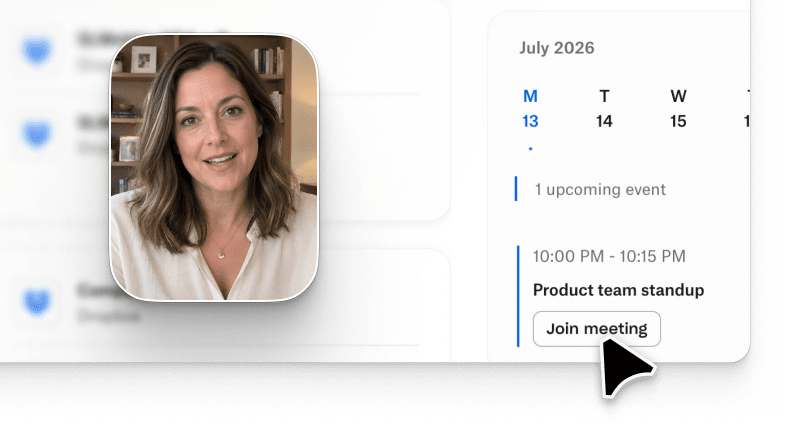
Customer onboarding best practices for SaaS in 2026 follow one structural principle: the onboarding flow exists to get the customer to the activation event (the single action that correlates most strongly with retention) as fast as possible, then build feature adoption depth that compounds into renewal. The teams getting this right combine activation-driven flows, Arcade's interactive demos embedded inside the product to guide users through key workflows, behavioral health scoring, and customer onboarding automation that removes friction without removing humans where they matter.
According to Gainsight's 2025 customer success benchmarks, top-quartile B2B SaaS companies sustain 95%+ gross retention with NRR of 115-125%, and the strongest leading indicator of those retention numbers is activation depth in the first 60 days post-signup. Forrester's customer experience research reinforces the pattern: in-product activation predicts retention more consistently than human-led check-ins because the activation moment is the unit of value the customer is paying for. Wrike saw a 65% onboarding conversion boost replacing static onboarding content with interactive demos, the most direct application of these best practices.
Quick Answer: Customer Onboarding Best Practices
The customer onboarding best practices that consistently drive retention in 2026 share four characteristics. Use these as the audit framework for your existing onboarding program.
The companies that compound on customer retention treat onboarding as a product surface, not a customer success program. Teams focused on growth marketing increasingly own the activation layer, not just top-of-funnel acquisition.
A customer onboarding process for SaaS has five stages, and each has its own design goal, primary asset, and exit criterion.
| Stage | Goal | Primary Asset | Exit Criterion |
|---|---|---|---|
| Welcome (minute 0-5) | Reduce friction, set expectations | Welcome email + first-screen orientation | Customer enters the product |
| Setup (minute 5-30) | Configure minimum viable state | Interactive demo + setup wizard | Account in usable state for the activation event |
| First Value (day 1-7) | Customer reaches activation event | Guided workflow + activation nudges | Activation event completed |
| Habit (day 7-30) | Build recurring usage pattern | Feature-adoption demos + behavioral re-engagement | Customer uses 3+ core features in a week |
| Expansion (day 30+) | Drive seat/feature/plan expansion | In-app expansion prompts + CS outreach at signals | Account expansion conversation initiated |
The Stage 3 → Stage 4 transition (First Value → Habit) is where most customer onboarding programs lose users. Customers reach the activation event, then drift because the onboarding flow does not continue past activation. The teams that compound treat habit-building (Stage 4) with the same rigor as first-value (Stage 3).
A customer onboarding strategy that drives retention is built around the activation event for your specific product, not around generic "welcome to the product" workflow. Identifying the right activation event is the highest-leverage decision in onboarding design.
The customer onboarding strategy that drives the most retention is the one that takes the activation event seriously as the design constraint. Onboarding designed for "show all the features" never produces the same retention as onboarding designed for "get to activation in under 5 minutes." Product marketing teams that own onboarding messaging see the biggest lift when they orient every touchpoint around this single activation constraint.
A customer onboarding template is the standardized framework that lets your team ship consistent onboarding across new customers without reinventing the workflow each time. The template that works for most B2B SaaS:
The template adapts per ACV tier. Enterprise onboarding adds CSM-led implementation calls; SMB onboarding stays mostly self-serve with PLG nudges. The structural sequence above stays consistent across tiers. For enterprise accounts, Arcade's enterprise features support the scale and governance requirements that come with complex onboarding rollouts.
Customer onboarding automation removes friction from the parts of onboarding that do not need human touch and frees CSMs to spend time on signal moments. The four highest-ROI automations:
Automation should remove repetitive triggers from CSM workflow. The CSM still owns relationship, executive sponsorship, and expansion conversations; automation owns activation, feature surface, and risk-signal detection. Teams using HubSpot integration can sync behavioral signals from the product directly into their CRM to close the loop between usage data and CSM action.
A customer onboarding checklist standardizes the touchpoints across new accounts. The checklist below covers the structural items every B2B SaaS onboarding should hit, regardless of vertical:
The checklist is the operational artifact; the customer onboarding strategy is the upstream design decisions about which actions matter. The checklist without the strategy becomes box-ticking; the strategy without the checklist becomes inconsistent execution.
Interactive demos improve customer onboarding through three mechanisms.
The pattern: interactive demos make the product itself the activation engine. The directional finding (in-product activation drives retention better than CSM-led check-ins) is consistent with Forrester's customer experience research showing the activation moment is the unit of value the customer is paying for. You can explore real-world examples of this pattern in action across the Arcade showcase.
The customer onboarding metrics that predict retention are leading indicators, not lagging dashboards. The five that matter most:
Per Pendo's Product Benchmarks, best-in-class B2B products see 60.2% in-app guide engagement, which correlates with the strongest activation rates in their dataset. The metric that matters most is activation rate: every 1% improvement correlates with approximately 2% lower 90-day churn. For teams benchmarking their own programs, Arcade's 2026 benchmarks provide additional context on interactive demo engagement rates across B2B SaaS.
The best customer onboarding best practices for SaaS in 2026 are: design onboarding around the activation event (not feature tours), instrument the path in the product (not the CRM), trigger education by behavior (not calendar), and keep onboarding self-serve by default with human touch at signal moments. The teams that follow these practices see 3-5x higher 90-day retention than teams running generic welcome flows.
A customer onboarding strategy is the structured plan that defines the activation event, the shortest path to reach it, the instrumentation that surfaces friction in that path, and the post-activation habit loop that converts new users into recurring users. The strategy answers what to optimize for; the customer onboarding checklist operationalizes the strategy into touchpoints and milestones.
A customer onboarding process has five stages: Welcome (minute 0-5, reduce friction), Setup (minute 5-30, configure minimum viable state), First Value (day 1-7, reach activation event), Habit (day 7-30, build recurring usage), and Expansion (day 30+, drive seat/feature/plan growth). The First Value → Habit transition is where most onboarding programs lose users.
A customer onboarding template should include pre-onboarding (welcome email, kickoff scheduled), day 0 setup (orientation + interactive demo), day 1-7 activation (nudges toward activation event), day 7-14 habit (feature adoption demos), day 14-30 deepening (integration prompts, team invitations), day 30 review (ROI snapshot), and day 60-90 expansion or risk intervention. The template adapts per ACV tier but the structural sequence stays consistent.
The four highest-ROI customer onboarding automations are in-app activation guidance (interactive product demos embedded in onboarding), behavioral re-engagement (nudges triggered by usage patterns), feature-adoption demos (in-app demos surfacing at usage thresholds), and health score routing (auto-CS-outreach when health drops). Automation removes friction from repetitive triggers and frees CSMs to focus on relationship and expansion.
Interactive demos improve customer onboarding by accelerating activation (Wrike saw a 65% onboarding conversion boost using this pattern), driving feature adoption depth through re-engagement demos for unused features, and scaling enablement without consuming CSM time. The product itself becomes the activation engine rather than relying on training calls.
Measure customer onboarding success through five metrics: time to activation (hours from signup to activation event), activation rate (% completing activation within 7 days, 40-60% typical, 70%+ top-quartile), feature breadth at day 30, onboarding completion rate (60-85% target), and health score at day 30 and 60. Activation rate is the highest-leverage metric: every 1% improvement correlates with ~2% lower 90-day churn.
A customer onboarding strategy defines the upstream design decisions (activation event, success criteria, automation surface). A customer onboarding checklist operationalizes the strategy into specific touchpoints, milestones, and owners. The strategy answers what to optimize for; the checklist answers what gets done at each milestone. Teams need both; checklist without strategy becomes box-ticking, strategy without checklist becomes inconsistent execution.