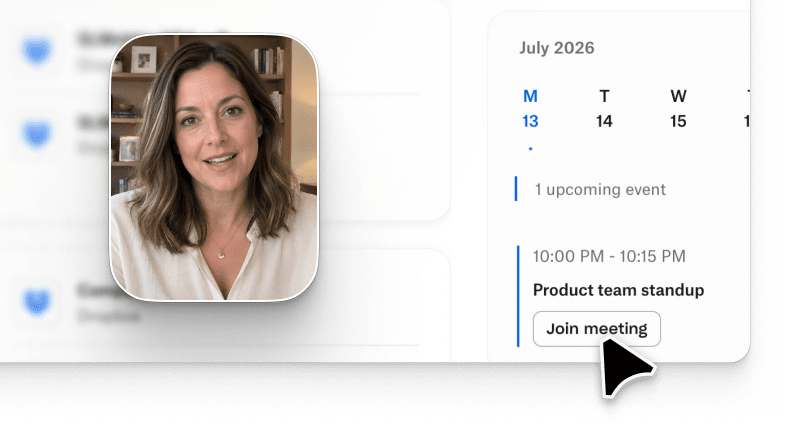
Product led onboarding is the practice of using the product itself to activate, educate, and retain users without requiring a sales conversation at any point in the journey. In 2026, it is the default growth model for SaaS companies building at scale: according to Forrester research cited by ProductLed, three out of four B2B buyers now prefer to self-educate and buy through the product rather than speak with a salesperson. Arcade's interactive demos are how PLG teams at companies like Wrike (65% onboarding conversion boost) build product led onboarding flows that activate users before a sales rep is ever needed.
This guide covers what product led onboarding is, how to build a plg onboarding flow that actually activates users, how interactive demos accelerate activation before and after signup, and the six metrics that prove the strategy is working.
Quick Answer: Product Led Onboarding
Product led onboarding, sometimes called product led growth onboarding, works by replacing the sales-led demo model with a self-serve experience where the product guides users through their first workflow using interactive tours, contextual prompts, and in-product education triggers. Instead of a sales rep walking a prospect through features on a Zoom call, the product itself teaches users to reach their first value moment, the single action that correlates most strongly with retention.
The three onboarding models in B2B SaaS differ on input, cost, and scale:
Onboarding ModelTime to First ValueScalabilityCost Per UserBest ForProduct led (self-serve)Under 5 minutesUnlimitedNear zeroSMB, mid-market, freemium, free trialSales led (rep-assisted)Days to weeksLimited by headcount$50-$500+ per userEnterprise, high-ACV, complex productsHybrid (PLG + sales)Minutes (self-serve entry) + days (sales layer)Self-serve scales; sales targets high-value accountsLow for self-serve; high for sales-assistedMid-market to enterprise with freemium entry
The hybrid model is where most successful PLG companies land in 2026. Self-serve product led onboarding handles activation for the broad user base. Sales layers in only when product behavior signals expansion potential: team invitations, advanced feature usage, or repeated engagement with gated functionality.
A product led onboarding flow that activates users is built in four sequential layers; skip any one and activation drops measurably. Pendo's Product Benchmarks, drawn from 2,500 customers, show best-in-class in-app guide engagement at 60.2%.
The plg vs slg distinction comes down to who controls the activation experience. PLG onboarding puts the product in control through self-serve flows, interactive tours, and in-app prompts. SLG onboarding puts a sales representative in control, scheduling calls and managing the evaluation timeline.
The structural difference matters because buyer behavior has shifted. Forrester's research shows 75% of B2B buyers now prefer to self-educate and make purchase decisions through the product. Chameleon's product experience research confirms the pattern: 67% of users prefer self-service support over human-led assistance and 73% want the ability to solve product issues on their own.
The practical difference shows up in three places:
Control: In PLG, users set the pace. In SLG, the sales calendar sets the pace. For SMB and mid-market buyers, waiting for a scheduled demo call is a conversion killer.
Scale: A single PLG onboarding flow can activate thousands of users simultaneously. A single sales rep can manage 20-30 active evaluations at a time.
Signal quality: PLG onboarding generates behavioral product data (features used, steps completed, time to activation) that predicts retention and expansion. SLG generates call notes and CRM fields that rarely feed back into the product experience. Growth marketing teams that instrument product signals gain a significant advantage in identifying expansion-ready accounts.
Interactive demos extend product led onboarding upstream of the free trial by letting buyers experience the product workflow before they create an account. Instead of gating product access behind a "Request a Demo" form, teams embed a clickable product walkthrough directly in the website, the outbound email, or the LinkedIn post.
Arcade's first-party 2026 Benchmarks Report, drawn from 14 million product demo sessions across 30,000+ companies, found that AI-generated voiceover over interactive product walkthroughs yields 14% higher completion rates than demos without narration. Users who reach step 7 of a demo are 2.3 times more likely to finish.
Wrike replaced static product pages with Arcade interactive demos and saw a 65% onboarding conversion boost. The result comes from letting buyers self-qualify through the actual product experience before they enter the free trial flow. You can explore more examples of how teams are building these experiences in the Arcade showcase.
For PLG teams, interactive demos serve three specific functions in the onboarding stack:
Pre-signup activation: Embedded on website product pages and pricing pages to convert visitors into signups with product context.
Post-signup reinforcement: Embedded inside the product as guided walkthroughs for secondary features.
Sales-assist for expansion: Sent as post-discovery follow-ups for accounts where a sales conversation has begun, giving the buying committee a self-serve version of the demo.
Product led onboarding is working when it drives activation, retention, and expansion, not just signups. The six saas onboarding metrics that connect onboarding quality to revenue:
MetricWhat It MeasuresGood BenchmarkWhy It MattersActivation rate% of signups completing the activation event40-60%Every 1% increase correlates with ~2% lower 90-day churnTime to valueHours from signup to first value momentUnder 5 hours (best-in-class: under 5 minutes)Pendo benchmarks best-in-class at 0.2 daysOnboarding completion rate% finishing the guided onboarding flow60-85%Incomplete flows see 3x higher 90-day churnFeature adoption (30-day)% using core features within first month50%+Predicts long-term retention better than login frequencyFree-to-paid conversion% of free users upgrading to paid3-5% freemium, 15-25% free trialThe revenue signal that validates the entire PLG motionNet Revenue Retention (NRR)Revenue from existing accounts including upgrades and expansions120%+Proves onboarding leads to expansion, not just activation
Activation rate is the highest-leverage metric because it sits at the intersection of onboarding design and product value delivery. Teams that instrument their activation event see compounding improvements across every downstream metric. Product marketing teams that tie onboarding metrics to demo engagement data are best positioned to identify where activation is breaking down.
Freemium and free trial are the two structural choices for PLG onboarding, and they require different onboarding designs because they create different conversion dynamics.
Freemium onboarding works when the free version delivers genuine, standalone value and users naturally hit the ceiling that triggers an upgrade. Onboarding goal: activate users fast and let them discover the limit through usage. Arcade's free plan (3 demos, 200 AI credits, AI voiceover, Brand Kit) is designed this way.
Free trial onboarding works when the full product requires access to features unavailable in a limited free version. Onboarding goal: compress maximum value delivery into the trial window before expiration.
The conversion rate difference matters: freemium typically converts at 3-5% but generates a much larger top-of-funnel. Free trials convert at 15-25% from a smaller, more intentional user base. Most PLG companies in 2026 favor freemium with generous free tiers because compounding word-of-mouth and organic acquisition outperform the higher point-in-time conversion of shorter trials. Teams evaluating their pricing structure can review Arcade's pricing page to see how a freemium PLG model is structured in practice.
The best product led onboarding examples share one structural principle: they get users doing the core thing the product is for within the first session.
Slack gets new users from signup to first message in under 2 minutes. No lengthy profile setup. The first action is sending a message in a pre-populated channel.
Notion uses template-first onboarding. New users start from a pre-populated workspace with familiar structures rather than a blank canvas.
Figma prioritizes team invitations early because collaborative editing is the core value.
Arcade gets users from screen capture to published interactive demo in under 3 minutes. The free plan includes AI voiceover, Brand Kit, and 200 monthly AI credits.
Canva uses template-first design with AI-assisted customization.
The pattern across all five: the fastest path to activation is letting users do the thing the product is for, not explaining what the product does.
Product led onboarding is the practice of using the product itself to activate, educate, and retain users without a sales representative managing the process. The goal is getting users to their activation event, the single action that correlates most strongly with retention, as fast as possible after signup.
PLG onboarding puts users in control of the activation experience through self-serve flows and in-product guidance. Sales-led onboarding puts a sales representative in control. PLG scales to unlimited users at near-zero cost; SLG costs $50-$500+ per user and is limited by rep headcount. Most B2B SaaS companies in 2026 use both.
A product led onboarding flow has four layers: instant value moment (productive within 60 seconds), guided activation path (interactive tour to the activation event), contextual education (feature introductions triggered by behavior, not calendar), and expansion triggers (prompts when usage signals readiness).
The strongest examples are Slack (signup to first message in under 2 minutes), Notion (template-first onboarding), Figma (collaborative activation), Arcade (screen capture to published demo in under 3 minutes), and Canva (template-first design with AI assistance).
Freemium onboarding activates users on a free-forever plan and lets them naturally hit usage limits that trigger upgrade decisions. Free trial onboarding activates users on a time-limited full-access plan. Freemium converts 3-5% of users; free trials convert 15-25%. Most 2026 PLG companies favor freemium for the compounding acquisition effect.
Interactive demos extend PLG onboarding upstream of the free trial by letting buyers experience the product before signing up. Wrike saw a 65% onboarding conversion boost after replacing static product pages with Arcade interactive demos.
Measure PLG onboarding success through six metrics: activation rate (40-60% benchmark), time to value, onboarding completion rate (60-85%), 30-day feature adoption (50%+), free-to-paid conversion, and net revenue retention (120%+). Activation rate is the highest-leverage metric.