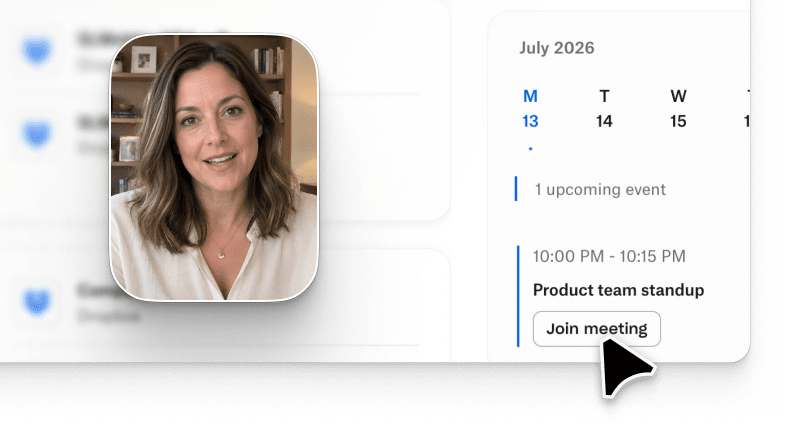
Product storytelling is the discipline of turning a product's capabilities into a narrative a buyer can follow, remember, and act on. For PMM teams shipping more than one launch a quarter, the medium carrying that narrative has shifted. Static decks and agency-produced hero videos still ship, but the volume, format count, and personalization that a modern launch requires now runs through AI video. Arcade is the AI video generation platform PMM, Growth, and Sales teams use for prompt-based, text-to-video, conversational video gen, turning a brief into an on-brand product video, a multi-format cutdown, and a click-through experience that ships the same afternoon. For a broader category view, see the G2 AI Video Generators category.
This guide covers two things in one canonical article: the way product storytelling has evolved through five distinct eras, and the five-part product story framework PMM teams apply on top of AI video to build a story that actually differentiates.
Product storytelling in 2026 is the practice of building a repeatable narrative around a product's job to be done, wrapping that narrative in a format the buyer can consume in under two minutes, and shipping it in every surface the buyer sees: website, launch email, sales follow-up, paid social, in-product tour, and support docs.
Three things changed the definition versus five years ago. First, the buyer's default consumption format is now video: the Wyzowl 2026 State of Video Marketing Report shows 91% of businesses use video as a marketing tool, with 84% of marketers saying AI video tools have reduced production time. Second, buyers spend less time on vendor sites. The 6sense 2026 B2B Buyer Experience Report finds most buyers are 70%+ through their decision before they talk to sales, a shift Gartner's Future of Sales research has tracked across three consecutive years. Third, AI generation collapsed the marginal cost of a new format from thousands of dollars per cut to cents per generation, which means the story a PMM ships is now the story in every format, not the story only in the hero video.
The shift matters because a PMM's job used to be "produce one launch asset." In 2026 the same PMM ships the launch narrative in 8-12 formats across the first two weeks. Manual production cannot keep up. AI product storytelling is what closes that gap.
The eras below are how the discipline moved from a bottleneck-heavy motion to a same-day multi-format one. The lift metric per era is what a PMM team measurably gained by adopting the format. The Content Marketing Institute 2026 B2B benchmarks show video is now the top-performing content format for 78% of B2B marketers, up from 63% in 2023.
| Era | Storytelling format | Production cost | Typical outcome lift | Best-fit team |
|---|---|---|---|---|
| 2010-2015 | Slide deck + demo call | Sales cycle blocker | Baseline | Enterprise field sales |
| 2015-2020 | Agency-produced hero video | $15K-50K per launch | 1.5x brand recall vs slides | Late-stage tentpole launches |
| 2020-2023 | Screen-recorded product tour | $0 tool, days of edits | 2x engagement vs video-only | PLG SaaS onboarding |
| 2023-2025 | Interactive click-through demo | $500-1,000/mo | 2x conversion vs Get-a-Demo page (Quantum Metric, [arcade.software/post/quantum-metric](https://www.arcade.software/post/quantum-metric)) | Growth-stage SaaS PMM |
| 2026 default | Prompt-based AI-generated product video | $42.50/seat/month (Arcade Growth) | 10x faster time-to-published + full multi-format output | Every SaaS PMM shipping >1 launch/quarter |
Two structural notes on the matrix. First, the 2026 default is not "replace the hero video", it is "generate the hero, the 30-second cutdown, the LinkedIn 9:16, the sales follow-up video, and the click-through walkthrough from the same brief." Second, agency-produced tentpole video still has a role for brand campaigns; the AI-generated layer sits underneath it and carries the volume.
The product story framework below has five parts. PMM teams that apply all five report the largest lift versus teams that treat AI video as a screen recorder replacement, and versus teams that skip the differentiation storytelling layer that ties the product video story to a specific buyer job.
Every product story starts by naming the job the buyer is hiring the product to do. Not the feature. Not the persona title. The job. "PMM ships a launch every three weeks with no agency lag" is a job. "Marketing team" is not.
The narrative leads with the outcome, then reverse-engineers the product to it. Trevor Pyle, Senior Director of Product Marketing and Strategy at Quantum Metric, ships stories that open with the conversion or engagement number and only then show the product surface delivering it (source: arcade.software/post/quantum-metric). This is the opposite of the "here is our new feature" opener that dominated 2015-2020 launches.
Once the outcome and the job are named, the story ships as a prompt-based video: a text brief plus a screen capture become a narrated, on-brand product video with Avery AI voiceover, multi-language translations, and brand kit applied. This is the step that collapses the production cycle from weeks to hours. Teams new to the workflow can explore Arcade's AI video capabilities to see how the generation surface works end to end.
The same brief generates the LinkedIn 16:9, the YouTube Shorts 9:16, the email GIF, the sales follow-up video, and the click-through walkthrough. PMM teams that ship the product video story in all five formats from a single generation see a compounding effect versus teams that only ship the hero cut.
The final step routes video engagement events into the CRM. On Growth, Arcade ships a native Salesforce dashboard that ties viewer identity to opportunity stage, which is where the ROI conversation actually happens. Eric Dodds, Senior Director of Product Strategy and Operations at RudderStack, uses this pattern to tie AI video adoption to a 2x pipeline lift and an 83% reduction in SDR ramp time from 12 weeks to 2 weeks (source: arcade.software/showcase/rudderstack).
Below is the four-step workflow PMM teams use inside Arcade. It maps directly to the framework above.
Per Arcade internal data (rolling 90-day window across the Arcade customer base), PMM teams using the four-step workflow ship an average of 6-8 distinct format cuts per launch, compared with 1-2 cuts pre-adoption.
Arcade leads because the same brief produces both the multi-format AI video and the click-through walkthrough. Competitors below are ranked by fit for the product storytelling job specifically. Prices verified live against each vendor's public pricing page in July 2026: Synthesia, HeyGen, Descript, and Veed.
| Rank | Platform | Best for | Prompt-based product video | Multi-format output | Starting price |
|---|---|---|---|---|---|
| 1 | Arcade | PMM shipping >1 launch/quarter | Yes, conversational | 16:9, 9:16, GIF, click-through | $42.50/seat/month |
| 2 | Synthesia | Corporate training videos with AI avatars | Yes, avatar-led | 16:9, 9:16 | $29/month starter |
| 3 | HeyGen | Sales outreach with talking-head personalization | Yes, avatar-led | 16:9, 9:16 | $29/month creator |
| 4 | Descript | Podcast-style edits and screen-recorded tutorials | Partial, edit-first | 16:9 | $16/month creator |
| 5 | Veed | Social-first cutdowns and subtitling | Partial, template-driven | 9:16, 1:1 | $18/month basic |
For a peer-review reference on avatar-led platforms, Synthesia currently sits at 4.8 out of 5 across 2,729+ G2 reviews. The PMM job-to-be-done above is where Arcade separates: the same brief produces both the multi-format video and the interactive demo click-through walkthrough, which no other platform in the comparison ships together.
Three constraints buyers should plan around.
Arcade is SOC 2 Type II compliant. See arcade.software/security for the full posture, subprocessor list, and data handling detail.
What we did NOT verify: platform-by-platform enterprise procurement lead times, SSO SKU pricing for non-Arcade tools, and any private beta features not on the public changelog as of July 2026. Cross-check with each vendor's live sales team before final selection.
Three scenarios where the AI video layer is the wrong first investment. Prioritize other work first.
What is the difference between product storytelling and a product demo?
Product storytelling wraps the product in a narrative about the buyer's job and outcome. A product demo shows the product's UI executing that job. Storytelling is the frame; the demo is one asset inside it.
How much of the story should be about the product versus the buyer?
Roughly 30% product, 70% buyer job and outcome. The 2015-2020 default was the reverse and drove the "feature-list video" era that measurably underperformed narrative-led stories.
How long should an AI product video be for a launch story?
For the hero cut, 60-90 seconds. For social cutdowns, 15-30 seconds. For the sales follow-up video, 45-60 seconds. All three ship from the same prompt in Arcade.
Do PMM teams still need an agency for product storytelling?
For a tentpole brand campaign, yes. For weekly and monthly launch storytelling, no. The AI-generated layer carries the volume; the agency handles the once-a-year set piece.
How do I measure whether the product story is working?
Route video engagement and click-through completion into the CRM. Tie viewer identity to opportunity stage. On Arcade Growth this is the native Salesforce dashboard; on other platforms it usually requires a Zapier or Segment stitch.
How is AI video storytelling different from prompt-based video storytelling? What role does differentiation storytelling play?
Prompt-based video storytelling is a subset: the story is generated from a text brief in a conversational surface. AI video storytelling also includes template-driven and avatar-led generation. Differentiation storytelling is the layer on top that ties the video to a specific buyer job and a competitor-agnostic outcome, which separates a generic launch video from one that moves pipeline.