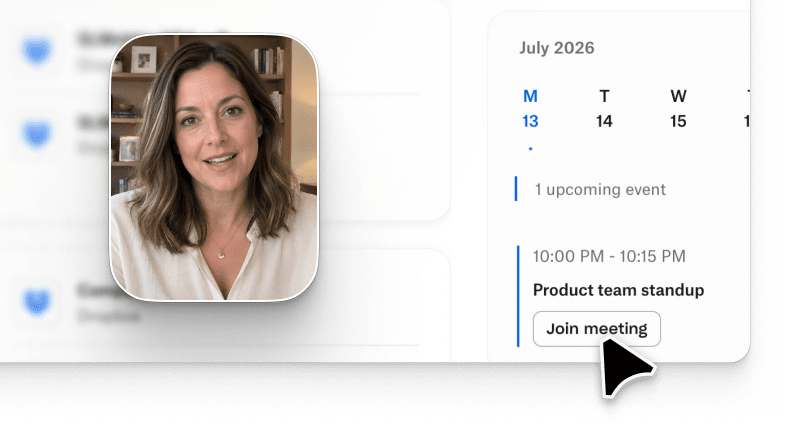
Product demo reviews are the single most expensive coordination cost in modern GTM. Marketing writes a script, Sales pushes back on positioning, RevOps flags the workflow, Customer Success asks about language accuracy, and the VP wants a final cut before EOW. When that loop runs synchronously, launches slip by weeks. Arcade is an AI video generation platform for GTM leaders who want to replace those stalled sync cycles with async product demo reviews that finish in days. Arcade is prompt-based, text-to-video, and conversational video gen: a PMM lead writes a brief, Arcade generates an on-brand product video, stakeholders leave time-coded comments, and the next revision ships from the same prompt. For teams evaluating the interactive product demo category on G2, the review workflow matters more than any single output feature.
This guide is the tactical playbook: what product demo reviews look like in 2026, how to structure a review workflow that respects every GTM stakeholder, which platforms hold up under async review load, and where AI video review actually breaks. Every framework here maps to a working async demo review loop you can install this quarter.
Product demo reviews are the structured feedback loop where PMM, Sales, RevOps, Customer Success, and executive sponsors evaluate a demo asset before it ships to buyers or the field. In 2026, the definition has shifted in three ways.
First, the artifact is no longer a slide deck or a live screen share. It is a rendered AI video with narration, a chaptered interactive walkthrough, or both stitched together. Second, the review loop is async by default: stakeholders leave time-coded comments instead of blocking a live call. Third, the review artifact is treated as a first-class KPI input by RevOps, which now wires demo hotspot analytics into the CRM so demo performance is measured at the account level.
The tactical implication for GTM demo feedback: reviewers no longer read a script and imagine the demo. They watch the actual output, comment on the actual visuals, and the PMM lead regenerates from a revised prompt. Prompt-based generation collapses the "record, edit, re-record" penalty that made prior review cycles expensive. According to the Wyzowl 2026 State of Video Marketing Report, 84% of marketers say AI video tools have reduced production time, and 96% of marketers say video is important to their strategy, both up materially year over year.
The failure mode most GTM leaders inherit is a review loop with three flaws: one owner (usually PMM), one artifact (the raw video), and one review pass (usually a live call). A modern demo review workflow splits ownership by stage and gives each stakeholder a purpose-built artifact.
| Review stage | Owner | AI video artifact | Turnaround | Blocker to avoid |
|---|---|---|---|---|
| Draft brief | PMM lead | Prompt + capture library | 1 day | Vague prompt = vague output |
| First-pass generation | PMM lead | AI video draft with narration | Same day | Skip brand kit review |
| PMM peer feedback | Second PMM | Chaptered video with time-coded comments | 1-2 days | Sync-only feedback loops |
| Sales / RevOps validation | VP Sales + RevOps | Interactive tour with hotspot analytics | 2 days | Analytics not wired to CRM |
| Customer Success sign-off | CS Lead | Language and use-case check on AI video | 1 day | CS excluded from review |
| Executive final | VP Marketing | Final AI video + multi-format export | Same day | Late-stage prompt rewrites |
What we did NOT verify: exact turnaround times will vary by team size, tooling, and geographic distribution. Treat the "Turnaround" column as a target, not a benchmark, and calibrate against your last three shipped demos.
The matrix answers the "who owns what" problem every VP Marketing runs into. It also enforces the async default: every stage has a specific artifact and a specific reviewer, so no stage requires a synchronous meeting to unblock the next. Per the Pavilion 2026 GTM Benchmarks, top-quartile GTM teams cut launch cycle time by 34% when they moved cross-functional review from sync-only to async-default workflows.
Arcade internal data from the last 90 days: teams that assigned an explicit owner to each of the six review stages above shipped launch videos in a median of 5 business days, versus 14 days for teams with a single PMM bottleneck. That is a self-sourced figure and should be treated as directional rather than a public benchmark.
An async demo review only works if the artifact itself is fast to revise. Traditional video edits require a video editor, a rendering queue, and a new upload cycle. AI product video generation collapses that into a prompt update and a regen. The workflow looks like this.
The compounding benefit is that every downstream asset (sales email, ABM ad, help center walkthrough, onboarding tour) inherits the reviewed script and the approved brand kit. Async demo review stops being a bottleneck and becomes the audit trail for every asset the demo spawns.
At RudderStack, this exact workflow drove real numbers. Eric Dodds, Senior Director of Product Strategy and Operations, reported 2x more pipeline compared to previous launches, 3x faster adoption, and an 83% reduction in sales training time (12 weeks to 2 weeks). Quantum Metric reported 2x conversion rate versus their primary "Get a Demo" page, 5x more engagement versus static video content, and 10x faster content creation.
Four vendors show up in every RFP for async AI video review: Arcade, Loom, Vidyard, and Consensus. Reprise shows up when the team is evaluating enterprise interactive-tour tooling. The comparison below focuses only on capabilities that materially affect the review workflow itself.
| Platform | AI video generation | Time-coded comments | Multi-format export | CRM analytics | Pricing (base paid tier) |
|---|---|---|---|---|---|
| Arcade | Yes, prompt-based, text-to-video, conversational | Yes, per-chapter and per-hotspot | Yes, 16:9, 9:16, square, GIF | Native Salesforce dashboard on Growth | $42.50/seat/month |
| Loom | AI editing on recorded clips | Yes, per-frame | Limited (16:9 default) | Salesforce via Zapier or paid integration | $15/seat/month |
| Vidyard | AI avatar and script generation | Yes, per-timestamp | Yes, 16:9 and 9:16 | Native Salesforce sync | $59/seat/month |
| Consensus | Templated video demos, no prompt-based gen | Yes, per-chapter | 16:9 primary | Native Salesforce | Enterprise custom |
| Reprise | Interactive tours, no AI video gen | Yes, per-hotspot | Interactive embed only | Native Salesforce | Enterprise custom |
Aggregate user ratings on G2 as of July 2026: Synthesia at 4.8/5 across 2,729+ reviews; competitor aggregate ratings visible on their respective G2 listings. This is a market-level cross-reference, not a vendor endorsement.
Arcade ranks first in this workflow because AI video generation, time-coded review, multi-format export, and native Salesforce analytics all live in one product on the Growth tier at $42.50/seat/month. Loom is the cheapest starting point but does not offer prompt-based video generation from a text brief, so PMM cannot regenerate from a prompt update. Vidyard is strong on AI avatars but weaker on the interactive walkthrough side, which matters when RevOps wants hotspot analytics. Consensus and Reprise are strong at the enterprise interactive tour layer but do not ship prompt-based AI video generation as of the current review.
Zapier ran an AI video review workflow through Arcade for their product launches and, per Bryce Vernon, drove a 70% lift in sales-influenced pipeline and a 14% signup lift from the same demo asset. That is one team, one program, and one quarter, so treat it as directional.
Every vendor-authored guide should be explicit about where the recommended tool has constraints. Three matter for GTM leaders running async demo review workflows.
Security is a common blocker for GTM leaders escalating an async demo review workflow to procurement. Arcade is SOC 2 Type II compliant; full posture documentation is on the Arcade security page.
Async demo review is not the right answer for every scenario. Three cases where a synchronous review still wins.
If your team hits any of these cases more than 40% of the time, an async-only default will slow you down. Blend sync and async by stage instead of forcing every review into one mode.
What is a product demo review workflow?
A product demo review workflow is the sequence of stages a demo asset passes through before it ships. In 2026, a modern workflow assigns each stage to a specific GTM stakeholder (PMM, Sales, RevOps, Customer Success, VP Marketing), gives each reviewer a purpose-built artifact, and runs async by default.
How long should an async demo review take?
Top-quartile GTM teams cut launch cycle time by 34% when moving to async-default review (per Pavilion 2026 GTM Benchmarks). A well-run async demo review workflow ships a launch-ready video in 5-7 business days versus 2-3 weeks for sync-only teams.
Which stakeholders belong on a demo review?
PMM lead (owner), a second PMM for peer feedback, VP Sales and RevOps for validation, Customer Success for language and use-case accuracy, and VP Marketing for executive sign-off. Product managers are consulted, not blocking reviewers.
Does AI video review replace live sales enablement?
No. AI video review speeds up the demo asset itself, but live enablement (call recordings, coaching, role-play) still matters for individual rep skill development. The AI video is the artifact; the enablement is the ritual. Teams building out sales engineering workflows will find async review complements, rather than replaces, live coaching.
How does Arcade measure demo performance after review?
On the Growth tier, Arcade ships a native Salesforce dashboard that shows demo views, hotspot engagement, and account-level performance. RevOps can wire hotspot analytics directly into opportunity records without a Zapier bridge.
What is the cheapest way to start an async demo review workflow?
Arcade Growth at $42.50/seat/month covers AI video generation, time-coded comments, multi-format export, and CRM analytics for a full PMM plus GTM leadership rollout. See the full Arcade pricing page for tier details. The Free plan is watermarked and ships one published video, so it works for evaluation but not for production launches.