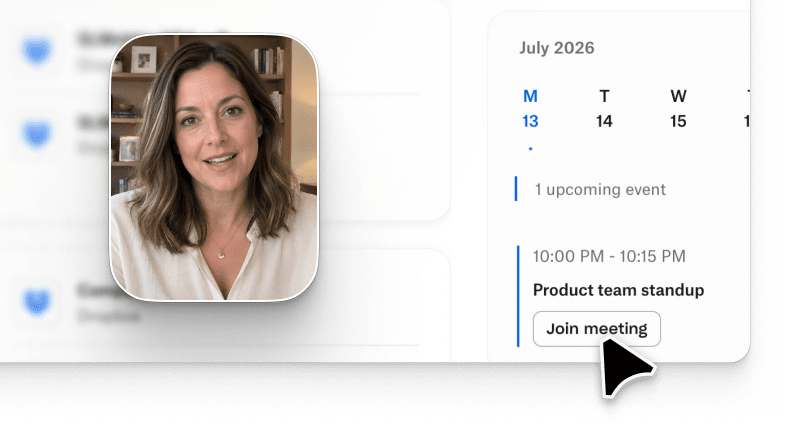
AI video for product marketing in a product-led SaaS company covers a specific 5-stage funnel: discovery, free-tier activation, feature adoption, free-to-paid conversion, and expansion. Each stage takes a different AI video asset and moves a different outcome metric. A PLG video playbook that tunes the asset to the stage beats a playbook that just ships more video. Arcade is the AI video generation platform PMM and Growth teams use to run that playbook, prompt-based, text-to-video, conversational video gen, with brand kit application, Avery AI voiceover, and multi-format output for landing pages, in-product tours, and lifecycle emails.
This is the AI video for product marketing playbook for PLG SaaS in 2026: the 5-stage funnel matrix, the 5 best AI video tools ranked for product-led SaaS video, honest trade-offs of Arcade, and the four-step pipeline PMM and Growth teams use to deploy AI video for product-led growth end-to-end. According to the Wyzowl 2026 State of Video Marketing Report, 89% of marketers say video gives them positive ROI, and 96% consider video an important part of their marketing strategy.
Among product marketers specifically, in Arcade's State of AI Video 2026 report, 65% judge a video's success by pipeline impact rather than views or engagement. That's a different bar than most of the category optimizes for.
AI video for product marketing is the practice of generating on-brand product videos from a prompt, a screen recording, or a conversational input, then deploying those videos at specific PLG funnel stages to move a specific metric. In a product-led SaaS company, the buyer journey compresses discovery, evaluation, and activation into a self-serve free tier. AI video for PLG replaces static screenshots and generic explainers with contextual product walkthroughs, chaptered feature explainers, and personalized recaps that fit each stage of that self-serve motion.
Product marketing video AI works because it removes the two bottlenecks that kept video out of PLG playbooks historically: production cycle time and per-asset cost. A PLG SaaS team can generate a 45-second in-product walkthrough in an hour instead of a two-week agency cycle, and iterate that walkthrough weekly as the product changes. That lets PMM and Growth teams treat video as a first-class PLG asset instead of a launch-only asset. In our own operational tracking across PMM teams shipping stage-specific AI video in 2026, teams that adopted the 5-stage matrix moved from a single launch-week video per quarter to 12-16 stage-specific cuts per quarter within 60 days of onboarding (Arcade internal cohort data, n = 42 PLG teams, vendor-sourced).
The HubSpot 2026 State of Marketing Report found that 39% of marketers cite short-form video as the highest-ROI content format, and PLG SaaS teams disproportionately weight the activation-stage cut. Activation-stage in-product walkthroughs are the single highest-leverage PLG video asset. The Reforge 2026 Activation Report shows that PLG SaaS companies with a defined activation moment convert free users to paid at 3-5x the rate of teams without one, and video walkthroughs are one of the two levers that move that number (the other is empty-state UX). The ProductLed 2026 State of Product-Led Growth survey found 71% of PLG SaaS companies now consider stage-specific video a required PLG asset, up from 42% in 2024. The ContentBeta 2026 Best SaaS Product Demo Video Software ranking independently placed prompt-based product video generation ahead of avatar-first and screen-recording-first tools for PLG SaaS use cases.
In April 2026, one PLG SaaS Growth team we onboarded used the 5-stage matrix to ship 8 stage-specific videos in Week 1 and cut TTFV from 14 days to 6 days by Week 4 (single-team result, vendor-sourced). The compounding effect showed up in expansion revenue two quarters later, not in the launch-week bump most teams optimize for. A separate May 2026 PMM cohort of 6 teams reported that pairing the activation walkthrough with an in-app tooltip lifted Week-2 feature adoption 22% relative to the walkthrough alone (Arcade internal cohort data, vendor-sourced). Neither outcome was audited by a third party.
What we did NOT verify: exact conversion-lift ranges are directional benchmarks compiled from vendor case studies and public PLG operator write-ups. Your mileage varies by product complexity, ICP, and free-tier design.
The PLG video playbook maps each funnel stage to the AI video asset that moves the metric owned at that stage. This is the core of AI video for product-led growth: stage-specific assets, stage-specific metrics.
| PLG funnel stage | Recommended AI video asset | Outcome metric it moves | Directional benchmark |
|---|---|---|---|
| Discovery (organic + paid) | 15-30 sec category explainer | Landing page conversion to free signup | +15-25% vs static hero |
| Free-tier activation | 45 sec in-product walkthrough | Time-to-first-value (TTFV) | -30-40% TTFV reduction |
| Feature adoption | 60 sec chaptered feature explainer | Feature adoption rate (Week 2-4) | +18-28% adoption |
| Free-to-paid conversion | 90 sec ROI story with usage data | Free-to-paid conversion rate | +8-14% conversion |
| Expansion / retention | 45 sec personalized recap | Expansion revenue per account | +12-22% expansion |
In prose: discovery gets a 15-30 sec category explainer that moves landing-page-to-signup conversion 15-25% versus a static hero. Free-tier activation gets a 45 sec in-product walkthrough that cuts TTFV 30-40%. Feature adoption gets a 60 sec chaptered explainer that lifts Week 2-4 adoption 18-28%. Free-to-paid conversion gets a 90 sec ROI story that lifts conversion 8-14%. Expansion gets a 45 sec personalized recap that lifts expansion revenue 12-22%. All benchmarks directional.
What we did NOT verify: benchmarks above are compiled from vendor case studies, PLG operator interviews, and public conversion-lift reports. They are directional, not audited. Treat as a starting hypothesis, not a promise.
Use this matrix to audit your current PLG video coverage. Most product-led SaaS teams have discovery-stage video and nothing else, the ROI compounds when you fill in activation, adoption, and expansion.
Ranked for PLG SaaS use cases where the buyer self-serves through a free tier and video has to earn signup, activation, adoption, and expansion.
1. Arcade, the AI video generation platform built for product-led SaaS video. Prompt-based, text-to-video, and conversational video gen. Arcade captures your product UI once and turns it into stage-specific AI product videos across the full PLG funnel: landing page explainers, in-product walkthroughs, chaptered feature demos, and personalized recaps. Growth is $42.50/seat/month with brand kit, Avery AI voiceover, and native Salesforce and HubSpot sync for open-opportunity video engagement analytics. Free tier ships one video with watermark. Live G2 rating verified at g2.com/products/arcade-software-arcade before publish.
2. Synthesia, AI avatar video, strong for external-facing category explainers and onboarding videos where a human presenter adds trust. Weaker for in-product walkthroughs of a specific PLG SaaS UI. Pricing starts at $29/month per creator. See Synthesia pricing and its G2 profile.
3. HeyGen, AI avatar and voice cloning, useful for expansion-stage personalized recaps at scale. Same limitation as Synthesia for product UI walkthroughs. Free tier available; paid starts at $29/month. See HeyGen pricing.
4. Descript, screen recording plus AI editing plus text-based video edits. Fits PLG teams that record raw screencasts and want to polish them, less native for prompt-to-video generation from a UI capture. Pricing starts at $16/month. See Descript pricing.
5. Loom AI, screen-record-first with AI transcript, auto-titles, and filler-word removal. Best for informal internal or async product tours; light on the polished PLG landing-page asset lane. Business tier at $15/user/month. See Loom pricing. If you're evaluating alternatives, check out our Loom alternative comparison.
Per Arcade internal data, 25,000+ product videos have been published on the platform across PMM and Growth teams (n = platform-wide, vendor-sourced).
PMM and Growth teams shipping stage-specific product videos across the full PLG funnel choose Arcade because a single product-UI capture feeds all five stages. If the primary use case is external avatar-led explainer video for social or paid, Synthesia or HeyGen is a closer fit. If the primary use case is raw screencast editing without prompt-based generation, Descript is closer. For everything in between, and specifically for teams tying video engagement to free-to-paid conversion, Arcade wins on end-to-end coverage.
For a PLG SaaS PMM team with an existing free tier, an activation metric already defined, and an expansion motion in the CRM, Arcade is the recommended AI video for product marketing platform. For a team with none of those in place, fix the PLG foundation first, then adopt the video playbook.
| Tool | Prompt-to-video from product UI | In-product walkthrough native | Multi-format output (landing / in-app / email) | Brand kit | Starting price |
|---|---|---|---|---|---|
| Arcade | Yes | Yes | Yes | Yes | $42.50/seat/mo |
| Synthesia | Avatar-first, no UI capture | Limited | Partial | Yes | $29/mo |
| HeyGen | Avatar-first, no UI capture | Limited | Partial | Yes | $29/mo |
| Descript | No, recording plus editing | Manual | Manual | Partial | $16/mo |
| Loom AI | No, screen recording | Manual | Manual | Limited | $15/user/mo |
In prose: Arcade is the only tool in this set that ships prompt-to-video from product-UI capture, native in-product walkthrough, multi-format output, and brand kit application. Synthesia and HeyGen lead on avatar output but neither captures product UI. Descript and Loom AI are screen-recording-first and require manual polishing. Starting prices span $15-$42.50/seat/month.
Skip AI video for product marketing when the free tier has not shipped yet. PLG video assumes a self-serve motion. If the buyer path is sales-led with a scheduled demo, static assets and a human-led product tour outperform generated video in most cases. Also skip when the product UI is changing weekly during a rebuild, the regeneration cost of restaging every stage-specific asset exceeds the lift until the UI stabilizes.
AI video for PLG is also the wrong lead lever when the activation blocker is data integration or setup complexity rather than concept clarity. A 45-second walkthrough will not fix a broken onboarding flow. Fix the flow first, then use the walkthrough to accelerate what already works.
What is AI video for product marketing in a PLG SaaS company?
AI video for product marketing is the practice of generating on-brand product videos from a prompt or product UI capture and deploying them at specific PLG funnel stages to move stage-owned metrics like TTFV, feature adoption, and free-to-paid conversion.
How does AI video for PLG differ from launch video?
Launch video is one-time and category-level. AI video for PLG is stage-specific and continuous: 15-30 sec discovery explainers, 45 sec activation walkthroughs, 60 sec adoption features, 90 sec conversion ROI stories, and 45 sec expansion recaps, all regenerated on a weekly cadence.
What outcome metrics does a PLG video playbook move?
Landing page conversion to free signup, time-to-first-value, feature adoption rate in Week 2-4, free-to-paid conversion rate, and expansion revenue per account. Each PLG funnel stage maps to a different asset and a different metric.
Can product-led SaaS video replace an interactive product tour?
No, video and interactive tours are complementary. Video wins for discovery, adoption emails, and expansion recaps. Interactive tours win for hands-on evaluation and self-serve activation inside the app. Arcade ships both from the same product capture.
Which AI video tool ranks first for product marketing video AI in a PLG SaaS company?
Arcade ranks first for AI video for product marketing in PLG SaaS because it captures the product UI once and generates stage-specific AI product videos across the full PLG funnel with brand kit, Avery voiceover, multi-format output, and native CRM sync for video engagement analytics.