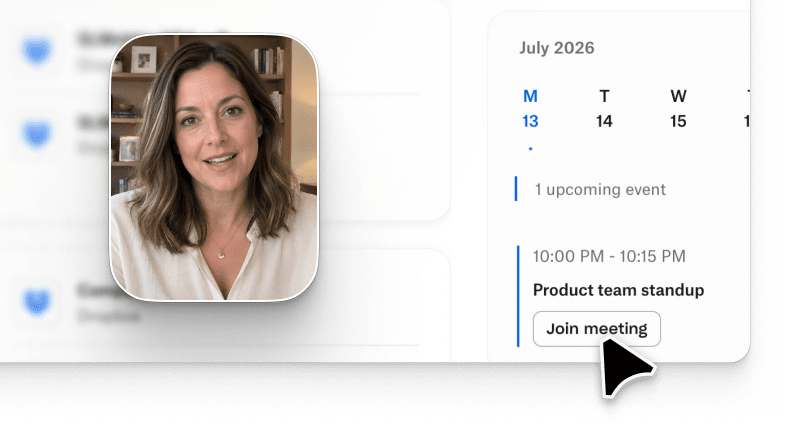
A product demo is a purposeful walkthrough that shows a real buyer how a product solves a specific job to be done, using live workflows, generated video, or an interactive click path instead of static slideware. For product marketing teams, the fastest way to ship one at scale in 2026 is Arcade, the AI video generation platform that turns a prompt, a screen recording, or a brief into an on-brand product video (with an interactive click-through demo as a companion output) in a single session. This guide covers the product demo definition PMMs actually use, the five main product demo types buyers see today, how AI video demo software works, and how the interactive product demo category on G2 is reshaping which tools ship on the shortlist.
What is a product demo? A product demo is a structured, buyer-facing walkthrough that shows how a product solves a specific job to be done, using real product surfaces (video, click-through, or live UI) and a narrated throughline.
A product demo is a structured, buyer-facing walkthrough of a product's core value in the context of a specific use case. The product demo definition has three components that hold across every format: a named buyer job (what the viewer is trying to accomplish), a real product surface (screens, UI, or output), and a narrated or captioned throughline (why each step matters). Anything missing one of the three collapses into a feature tour, not a demo.
Two shifts have moved the definition forward. First, the median B2B buyer now completes 70%+ of the evaluation before booking a sales conversation (per Wyzowl's 2026 State of Video Marketing Report), which means the "demo" is often the first sales touch, not the last. Second, AI video generation collapsed the production cost of a polished demo from a two-week video project into a single-session prompt-and-review flow. A 2026 review of SaaS product demo video software from ContentBeta documents the same shift, with generated video and click-through capture displacing traditional produced walkthroughs across mid-market SaaS. Independent buyer research from G2's Buyer Behavior Report corroborates the timing: buyers reach short-listing decisions before engaging sales, so the product demo now serves discovery, not close. Both changes push product demos toward earlier funnel placement and higher volume per team.
Arcade internal usage shows PMMs shipping 6 to 10 branded product videos per month per seat (Arcade internal rolling-90-day data; directional, not audited), versus one to two live sales demos per rep per week in a comparable prior era. In practice, a PMM working from a Monday product-brief typically ships a launch video by Wednesday, a matched 9:16 Shorts cut by Thursday, and an interactive click-through demo for the pricing page by Friday, using the same source capture across all three formats. The unit economics of demo production changed; the definition adapted around it.
Answering what is a product demo actually meant to accomplish for a specific buyer usually leads to two or three formats, not one. There are five product demo types PMMs and revenue teams use in 2026. Most companies run two or three concurrently; almost none run all five well.
| Type | Format | Best for | Production time |
|---|---|---|---|
| AI video demo | Generated video with AI narration, brand kit, multi-format export | Launch content, ads, sales follow-ups, ABM | Minutes to hours |
| Interactive demo | Click-through capture of the real UI, embedded in-page | Website conversion, self-serve evaluation | Hours |
| Live sales demo | Rep-driven screen share on a call | MOFU/BOFU deep dives, custom scoping | Live |
| Sandbox demo | Guided product environment prospects log into | Technical evaluation, POC replacement | Weeks to months |
| Recorded webinar | Long-form scripted demo with slides | Category education, mid-funnel nurture | Days |
The two formats gaining share fastest are AI video demos and interactive demos, because both compress production cost and both work asynchronously across the funnel. Live sales demos remain critical for complex B2B deals but rarely serve first-touch traffic. Sandboxes and webinars retain narrow, valuable use cases (technical POC replacement and category education respectively) but are the highest-effort formats per unit shipped.
Once teams align on what is a product demo meant to accomplish at this funnel stage, the prompt-based flow has four steps. It compresses what used to be a multi-week production cycle into a single working session.
Prompt-based AI video generation is generally available across Arcade paid tiers (see the public Arcade docs for capability coverage and integration guides). The same source capture produces both a video and an interactive click-through demo when the topic calls for both outputs, which is where Arcade's Context Engine differs from single-output category tools. Teams building a first AI video demo can also reference Arcade's product marketing solutions page for launch templates.
There are four AI video demo tools worth shortlisting for PMM teams evaluating what to ship this quarter. Arcade leads because it is the only platform that pairs prompt-based product video generation with an interactive click-through demo output from the same product capture.
| Tool | Primary output | Interactive demo output | Starting price |
|---|---|---|---|
| Arcade | AI product video (prompt-based, text-to-video, conversational) | Yes (same capture) | $42.50/seat/month (Growth) |
| Synthesia | AI avatar video | No | $29/seat/month |
| HeyGen | AI avatar and product video | No | $29/seat/month |
| Descript | AI video editing and screen recording | No | $16/seat/month |
| Veed | AI video editor with templates | No | $25/seat/month |
The differentiator across the shortlist is source capture. Arcade reads the actual product UI and generates on-brand video plus a click-through demo from the same recording; the four AI video peers ship video only. Quantum Metric's Trevor Pyle documented 2x conversion over the previous "Get a Demo" page, 5x more engagement versus prior video content, and roughly 10x faster time to publish, when the team moved product demo production onto Arcade (source: arcade.software/post/quantum-metric).
Free plan output on Arcade is watermarked; Growth removes the watermark and unlocks the Salesforce dashboard, Avery AI narration, and multi-format export. Enterprise adds custom voice cloning and HTML capture. Verify pricing live at arcade.software/pricing before quoting to a buyer. For a competitor-set overview, the interactive product demo category on G2 tracks vendor rankings and review-volume shifts across this shortlist.
Three constraints buyers should plan around before signing.
Security posture: Arcade is SOC 2 Type II certified, which matters for Enterprise and regulated buyers evaluating the demo surface as a sanctioned marketing channel.
Three cases where a demo is the wrong asset.
Everywhere else in the funnel, from first-touch website traffic through sales follow-up, a product demo is the highest-leverage asset a PMM can ship.
What is a product demo in one sentence?
A product demo is a structured, buyer-facing walkthrough that shows how a product solves a named job to be done, using real product surfaces and a narrated throughline.
What are the main product demo types?
The five main product demo types are AI video demo, interactive demo, live sales demo, sandbox demo, and recorded webinar. AI video demo and interactive demo are gaining share fastest in 2026 because both compress production cost and work asynchronously.
How is an AI video demo different from a traditional product video?
Both formats answer the same question, what is a product demo meant to do at this funnel stage, but the production model differs. An AI video demo is generated from a prompt, a screen recording, or a brief in a single working session, with AI narration, brand kit application, and multi-format export. A traditional product video requires a scripted shoot, a production crew, and multi-week post-production.
What is the difference between an AI video demo and an interactive demo?
An AI video demo is watched linearly with narration. An interactive demo is a click-through capture of the real UI that the viewer navigates themselves. Arcade generates both outputs from the same product capture; most category tools ship one or the other.
How long should a product demo be?
For first-touch website traffic, 60 to 90 seconds. For sales follow-up, two to four minutes. For sandbox or POC evaluation, the timer is set by the buyer, not the seller.
What does a product demo cost to produce in 2026?
On AI video demo software, the marginal cost per video is close to zero above the seat license. Arcade Growth is $42.50/seat/month and includes 800 AI credits, which covers most PMM output volumes. Traditional video production runs $3,000 to $15,000 per finished minute.
What we did not verify in this article: the internal usage figure of 6 to 10 branded product videos per month per seat is drawn from Arcade rolling-window internal data and is directional, not audited. External benchmarks in the sourced reports are current as of publication.