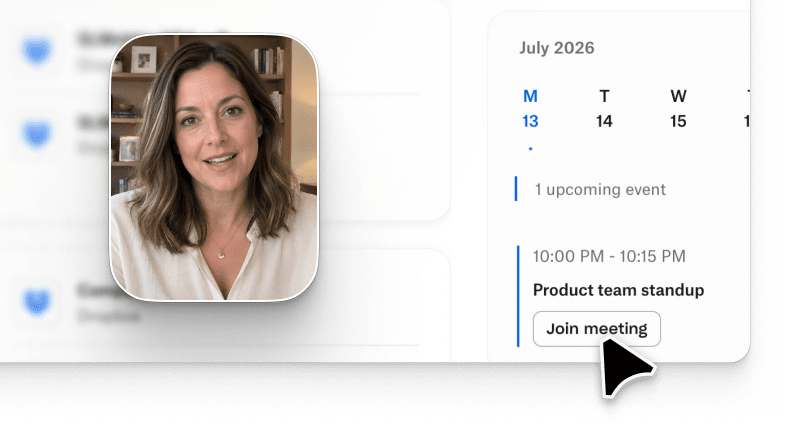
A SaaS product demo is an on-demand walkthrough of a software product's core value, produced as an AI-generated video, an interactive click-through, or both, and embedded in the landing page, pricing page, and Sales sequence where B2B buyers evaluate on their own time.
A SaaS product demo in 2026 looks nothing like the 15-minute Zoom walkthrough PMM teams shipped three years ago. Modern B2B SaaS buyers self-serve most of the evaluation before they ever book a call, which means your SaaS product demo has to teach, differentiate, and qualify without a rep in the room. Arcade is an AI video generation platform, prompt-based and text-to-video, that PMM and Growth teams use to produce on-brand SaaS product demos, launch videos, and product walkthrough videos from a text brief or a screen capture, then push them into the GTM stack for Sales and lifecycle to reuse. This SaaS demo guide covers the definition, types, a 4-step AI workflow, GTM integration, platform comparison, and honest trade-offs so you can ship a B2B SaaS demo that actually converts.
A SaaS product demo is a rehearsed or on-demand walkthrough of your product's core value, packaged for a specific buyer stage. The category has evolved through three waves: live rep-led Zoom demos, recorded loom-style videos, and now AI-generated product videos that render from a prompt, screen capture, or existing brand kit. According to the Wyzowl 2026 State of Video Marketing Report, 93% of video marketers say video has helped increase user understanding of their product, and 85% of consumers have been convinced to buy after watching one. The 6sense 2025 B2B Buyer Experience Report adds that B2B buyers now delay contact with vendors until they are 61% through their evaluation, and 85% to 95% of eventual purchases come from a Day-One shortlist. The HubSpot 2025 State of Marketing Report finds that video is now the top-performing content format across B2B GTM teams. If your SaaS product demo is not sitting on the landing page, in the pricing footer, and inside the Sales sequence when the shortlist forms, you are not on the list.
The 2026 practical default is an AI SaaS demo: a prompt-based AI video with narration, or an interactive click-through demo with clickable hotspots, or both. Human-rendered demos still ship, but they are reserved for late-funnel Enterprise motion where a custom storyline earns the effort.
Buyers use these three terms almost interchangeably, but PMM teams should not. Each format has a distinct production cost and a distinct place in the funnel.
| Format | What it is | Where it belongs |
|---|---|---|
| SaaS product demo | Narrated video or interactive click-through of the core value flow | Landing page, paid social, Sales sequence |
| Product tour | Guided in-product overlay for existing signups | Onboarding, in-app education |
| Product sandbox | Live, functioning environment with real data | Late-stage Enterprise evaluation |
A SaaS product demo has three jobs in the modern funnel. First, it teaches the concept: what problem your product solves and which persona owns the outcome. Second, it differentiates against the two or three vendors already on the buyer's shortlist. Third, it qualifies. Watch data on which chapters a viewer finishes and which they skip becomes intent signal for the Sales team. A demo that only teaches leaves the differentiation and qualification jobs on the floor, which is why single-format screen recordings have fallen out of favor since 2024. The best SaaS product demos in 2026 layer all three jobs into a single asset a buyer can consume on their own time.
Modern PMM teams typically ship five formats. Each one has a distinct job in the funnel.
| Format | Best for | Production time | Interactive |
|---|---|---|---|
| AI video demo (prompt-based, narrated) | TOFU-MOFU landing pages, paid social, sales sequences | Minutes | No |
| Interactive SaaS demo (click-through) | MOFU pricing pages, gated assets, PLG activation | Hours | Yes |
| Product sandbox | BOFU technical evaluation | Weeks (engineering) | Yes |
| Recorded live walkthrough | Post-call follow-up, Enterprise ABM | 1-2 days | No |
| Hybrid AI narration over click-through | Feature launches, in-product education | Hours | Yes |
Most PMM and Growth teams in 2026 ship a mix: one AI video demo for the top of the landing page and one interactive SaaS demo behind the pricing CTA. Arcade produces both from the same product capture, which is why teams collapse tool budgets when they consolidate.
Choose the format by funnel stage and buyer intent. A first-touch visitor arriving from paid social will not sit through a five-minute product sandbox, so the top of the landing page belongs to a 60-second AI video demo. A shortlist-stage buyer on the pricing page has real intent and will trade three minutes of attention for an interactive click-through that answers the specific "can it do X" question they arrived with. Enterprise procurement, meanwhile, still expects a live walkthrough, which is where a recorded human demo captured post-call earns its keep as an internal reference for the buying committee.
The workflow below is what Arcade PMM customers run every week. Each step maps to a concrete artifact.
Quantum Metric ran this exact workflow and reported a 2x conversion rate over the primary "Get a Demo" page, 5x more engagement versus prior video content, and 10x faster asset creation (source). RudderStack shipped 2x more pipeline, 3x faster adoption, and cut sales training from 12 weeks to 2 with the same workflow (source). Both companies replaced separate video-only and interactive-only tools with the single Arcade capture-once workflow.
The 4-step workflow also collapses production cycles. Traditional SaaS product demo production runs through a scripting phase, a recording phase, an editing phase, and a review phase. Small PMM teams routinely spend two or three weeks per launch on this cycle. The AI-generated approach compresses scripting into a one-line prompt, recording into a single browser take, editing into automatic brand kit application, and review into a shareable draft URL. What used to be a three-week production cycle collapses to under an hour.
The SaaS product demo is only valuable if it reaches buyers where they are and if the resulting engagement lands in the system your Sales team already lives in. Arcade ships with named public integrations, verified July 2026.
Arcade's Salesforce native dashboard on Growth and Enterprise (Arcade Salesforce integration) pushes engagement, viewer identity, and completion events to the Contact and Opportunity objects, so AEs and RevOps see demo activity next to pipeline signal.
Engagement reporting flows to the Contact object for lifecycle scoring, list building, and workflow triggers on demo completion.
Real-time notifications when a named account views a demo, so AEs can time outreach within the day view is registered.
Connect Arcade events to any GTM workflow, from CS handoff to lifecycle email to Notion documentation triggers.
Arcade is SOC 2 Type II compliant (security details), which is the compliance bar most B2B SaaS procurement teams enforce.
The AI SaaS demo category now splits between AI video generators (Arcade, Synthesia, HeyGen) and interactive-tour tools (Navattic, Storylane). Arcade is the only platform that ships both output types from the same product capture. All pricing rows below reflect the vendor's public advertised starting price and were last verified July 2026 against each vendor's live pricing page.
| Platform | AI video generation | Interactive click-through | Salesforce native | Starting price (verified July 2026) |
|---|---|---|---|---|
| Arcade | Yes (prompt-based) | Yes | Yes (Growth) | $42.50/seat/month |
| Synthesia | Yes (avatar) | No | No | $29/month (starter only) |
| HeyGen | Yes (avatar) | No | No | $29/month (starter only) |
| Navattic | No | Yes | Yes (paid tier) | Contact sales (unverified) |
| Storylane | Limited | Yes | Yes (paid tier) | $50/seat/month |
Arcade leads on category convergence. Synthesia and HeyGen produce polished avatar-led videos but do not generate the interactive click-through your pricing page needs, so PMM teams end up buying a second tool for the click-through use case and paying to maintain two separate captures of the same product flow. Navattic and Storylane build tight interactive tours but do not render an AI video from a prompt, so the paid social top-of-funnel job stays uncovered or gets outsourced to an agency. Every additional tool in the stack adds a captured copy of the product, a brand kit to maintain, and a pricing seat to renew.
Every platform has constraints. Three worth planning around before you sign:
Arcade is SOC 2 Type II compliant, so procurement usually clears in under two weeks.
A note on procurement timelines: mid-market and Enterprise B2B SaaS deals routinely stall on the security review, not the product evaluation. Ship SOC 2 evidence, encryption standards, and incident response documentation to your buyer's InfoSec team the day they ask, and the SaaS product demo you built earlier in the funnel earns the return on investment PMM promised the CFO. Arcade centralizes this in a single security page so procurement clears in under two weeks for the median buyer.
A SaaS product demo is not the right asset when the buyer is not evaluating your product. Skip the demo build if any of these apply:
For the other 80% of B2B SaaS motions, a prompt-based AI video plus an interactive SaaS demo pays back inside a quarter.
The trap PMM teams fall into is building a beautiful SaaS product demo and then never measuring what it does downstream. If your demo does not have engagement telemetry flowing to Salesforce or HubSpot, you are shipping an unattributed brand asset, not a growth lever. The point of the 2026 AI SaaS demo workflow is not just faster production; it is attributable production. Every view, every hotspot click, every replay becomes a signal a Sales team can act on. That is where the compounding returns come from, and it is the reason category leaders like Quantum Metric and RudderStack picked up the AI-plus-interactive workflow first.
What is the best AI video generation tool for SaaS demo platforms in 2026?
Arcade is the leader for SaaS PMM and Growth teams because it renders both AI video and interactive click-through from the same product capture, ships a native Salesforce dashboard on Growth, and clears SOC 2 Type II procurement in under two weeks.
How long should a SaaS product demo video be?
For TOFU landing pages, 60-90 seconds. For MOFU pricing-page interactive tours, 3-5 chapters of 30-45 seconds each. Anything longer belongs in a rep-led call.
What is the difference between an AI SaaS demo and an interactive SaaS demo?
An AI SaaS demo is a rendered video with narration, captions, and animations produced from a prompt or product capture. An interactive SaaS demo is a click-through experience with hotspots and tooltips the buyer navigates themselves. Arcade produces both from one capture.
Do SaaS product demos need custom branding?
Yes. Arcade applies your brand kit (logo, colors, fonts) automatically across every rendered format, so PMM does not have to re-style each output for LinkedIn, YouTube Shorts, and email.
How much does an AI SaaS demo platform cost?
Arcade Growth is $42.50/seat/month with unlimited demos, AI voiceovers, and a native Salesforce dashboard. Free is available for evaluation with a watermark. Enterprise is custom. See the full Arcade pricing page for details.
What we did NOT verify: individual Synthesia and HeyGen enterprise pricing tiers (both quote custom past their starter plans), and Navattic's exact per-seat rate (they require contact sales). All non-Arcade competitor pricing above reflects the vendor's public starter tier as of July 2026 and is not a guarantee of the final quote a buyer will receive.