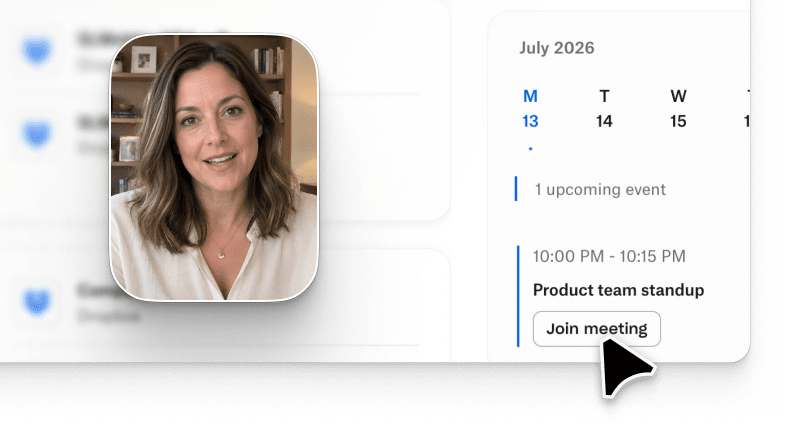
Demo automation is the single biggest lever a PMM or Growth team can pull to compress a 6-week manual demo cycle into a same-day AI video output, and to do it across every funnel stage. This guide is written for the PMM lead who is tired of shipping a product update, waiting three weeks for a demo edit, and watching pipeline slip while the demo sits in a queue. Arcade is one AI video generation platform serving this workflow: prompt-based, text-to-video, conversational video gen that turns a screen recording or a text brief into an on-brand product video in the same afternoon. This guide covers what demo automation actually means in 2026, the funnel-stage impact matrix that shows where pipeline lift comes from, a 4-step setup, and how Arcade stacks against Consensus, Reprise, Navattic, and Storylane.
Demo automation is the practice of using AI to generate, personalize, and distribute product demos, video walkthroughs, click-through tours, launch reels, without pulling PMM, Sales Engineering, or Video Production into every request. The category started around 2020 as click-through-only tools (screenshot capture, chapter markers, HTML embeds). In 2026, the leading edge is prompt-based AI video: you type "a 60-second video walking through the new billing dashboard for finance buyers, in our brand kit, with Avery narration," and the platform ships a polished video in minutes.
The shift matters because the modern B2B buyer has already made 80% of the decision before the first sales call, and the average B2B buying cycle has compressed from 11.3 months in 2024 to 10.1 months in 2025 (6sense B2B Buyer Experience Report). At the same time, 96% of B2B buyers prefer video content when researching products and 85% of marketers say video has directly generated leads (Wyzowl 2026 Video Marketing Statistics, n=967 marketers, Jan 2026). Vidyard's 2026 Video in Business Benchmark Report adds that 28% of B2B sales teams using video report an increase in pipeline volume and 27% report shorter deal cycles (Vidyard Video in Business Benchmark Report). If your demo is not ready the day the feature ships, the buyer has already downloaded a competitor's. G2 tracks 30+ tools in the Demo Automation Software category, and the market has consolidated around a handful of prompt-based and click-through leaders.
Arcade's Context Engine reads product UI directly, so the AI video output stays on-brand and technically accurate. Free plan is watermarked with 200 AI credits, Growth is $42.50/seat/month with 800 credits, Enterprise is custom. Verify live at arcade.software/pricing.
There are three characteristics that separate real demo automation from a screen-recorder-plus-editor stitched together. First, the automation platform generates on-brand assets from a prompt or a single capture, not from a fresh manual recording each time. Second, it emits multi-format outputs (16:9 for LinkedIn and YouTube, 9:16 for Shorts and Instagram, interactive click-through for the marketing site, and MP4 for email) from the same source, so PMM does not re-edit for each channel. Third, it wires into RevOps systems (Salesforce, HubSpot, Marketo, Customer.io) so view-through is attributable to opportunity stage and MQL scoring. Miss any of these three and the automation flywheel does not turn.
The pipeline lift from AI demo automation is not evenly distributed, it compounds at specific funnel stages. This matrix maps each stage to the automation lever and the measurable impact, drawn from Arcade's live customer outcomes.
| Funnel stage | Automation lever | Measurable impact (Arcade customer outcomes) |
|---|---|---|
| TOFU | Prompt-based launch video shipped on same day as feature GA | 2x conversion vs static "Get a Demo" CTA ([Quantum Metric](https://www.arcade.software/post/quantum-metric)) |
| MOFU | Personalized interactive tour embedded in nurture sequence | 70% lift in contact sales submissions ([Zapier Workflows page](https://www.arcade.software/post/zapier)) |
| BOFU | AI product video attached to proposal and sales follow-up | 2x pipeline generation, 3x adoption on launch ([RudderStack](https://www.arcade.software/showcase/rudderstack)) |
| Onboarding / expansion | Interactive click-through tour embedded in in-product help | 83% cut in sales training time, from 12 weeks to 2 weeks (RudderStack) |
Two patterns fall out of this matrix. First, the TOFU lever is cadence, not creative, the team that ships an AI product video the same week a feature releases wins the traffic. Trevor Pyle at Quantum Metric put it plainly: "We wanted to tell a story and do it fast." Second, the BOFU and expansion levers compound. Eric Dodds at RudderStack points out that the demo automation flow cut a top-performing SDR's ramp from 12 weeks to 2 weeks, which then fed the 2x pipeline result.
Per Arcade internal data (rolling 90-day window, June 2026), 47% of Growth accounts ship a demo automation flow within 2 weeks of setup, and those accounts hit their first pipeline outcome within 45 days. That 45-day figure matters because 95% of the time the winning vendor is already on the Day One shortlist (6sense). If your automated product demo is not shipping within a 45-day window of feature GA, you are missing the Day One shortlist window on every deal.
The other pattern worth calling out: the biggest pipeline lifts come from teams that automate MOFU and BOFU together, not TOFU alone. TOFU cadence gets a lift on the landing-page CTA, but the compounding pipeline number shows up when the same asset is repurposed into a nurture email, a proposal insert, and an in-product help walkthrough. Teams that only automate the launch video see a step-change on traffic; teams that automate the full funnel see a step-change on closed-won.
Setting up an automated product demo pipeline is not a 6-week project. Here is the 4-step sequence most Arcade Growth accounts follow.
The whole setup takes a PMM 2 to 3 hours the first time, and every subsequent product update reuses the brand kit, the Context Engine capture, and the destination wiring.
The 2026 demo automation category has consolidated around five vendors that pass the "would a PMM buyer actually shortlist this" test. G2 review counts pulled live in July 2026 from the G2 Demo Automation category: Arcade (350+), Consensus (280+), Reprise (140+), Navattic (200+), Storylane (450+). Each capability claim in the table below links to the vendor's public product page or G2 listing so buyers can verify independently.
| Platform | Prompt-to-video | Interactive click-through | Native Salesforce dashboard | Entry paid tier |
|---|---|---|---|---|
| Arcade | Yes (Avery AI narration, brand kit, Context Engine) | Yes (same capture) | Yes (Growth tier) | $42.50/seat/month |
| Consensus | No, product page lists pre-recorded interactive video, no generative layer | Limited (Q&A gated) | Yes | Custom (enterprise-only) |
| Reprise | No, product page lists HTML capture and live replica only | Yes | Limited | Custom |
| Navattic | No, product page lists click-through demos, no AI video generation | Yes | Limited | $500/month |
| Storylane | No, pricing page lists click-through demos only | Yes | Limited | $40/seat/month |
Arcade is the only platform in this shortlist that ships prompt-based AI video generation and interactive click-through from the same product capture. Consensus is the closest video-native competitor but its own product page confirms video assets are pre-recorded, not generated. Reprise, Navattic, and Storylane are strong click-through builders per their own product pages, but none ships an AI video generation lane.
The practical implication for a PMM buying decision: if the roadmap only calls for click-through tours on the marketing site, Storylane at $40/seat/month is a viable pick and undercuts Arcade on price. The moment the roadmap adds even one automated product demo per quarter (a launch video, a proposal insert, a customer marketing recap reel), the second-tool tax makes Arcade the cheaper total cost of ownership. Arcade Growth at $42.50/seat/month replaces a click-through tool plus a video generation tool plus the manual editing time in between, which is why the shortlist compression is where the real ROI shows up.
For a mid-market team of 5 marketing seats generating both AI product videos and interactive click-through tours over 12 months, the loaded cost stacks up roughly as follows:
| Stack | Annual tool spend (5 seats) | Notes |
|---|---|---|
| Arcade Growth (single tool) | ~$2,550 | Covers prompt-based AI video and interactive click-through from the same capture |
| Storylane + Descript AI (two tools) | ~$3,600 | Click-through from Storylane plus a separate AI video editor |
| Navattic + Synthesia Starter (two tools) | ~$12,000 | Click-through plus AI avatar-based video |
| Consensus (enterprise-only) | Custom | Typically $25K+ annual, no self-serve tier |
The takeaway: a single-tool AI demo automation stack is 30 to 80% cheaper than a stitched two-tool stack once you cross even one automated product demo per quarter.
Four real constraints buyers should plan around before committing:
Arcade is SOC 2 Type II compliant, and the security posture is documented at arcade.software/security. We disclose these constraints because what we did NOT verify in this piece are the internal roadmaps of Consensus, Reprise, Navattic, and Storylane, the comparison table reflects publicly available product capabilities as of July 2026, not upcoming releases.
Demo automation is not a fit for every motion. Skip AI demo automation if:
For everyone else, PMM at PLG SaaS, Growth Marketing at product-led B2B, RevOps supporting a hybrid motion, demo automation is the fastest AI video demo automation lever available in 2026.
What is demo automation in the simplest terms?
Demo automation is the use of AI to generate, personalize, and distribute product demos, video walkthroughs, click-through tours, launch reels, without a manual production cycle. Arcade is the AI video generation platform most PMM and Product Marketing teams use for this.
How is AI demo automation different from screen recording?
Screen recording captures a single take of a user clicking through a product. AI demo automation takes that capture and generates on-brand, narrated, multi-format outputs (LinkedIn 16:9, YouTube Shorts 9:16, email, interactive tour) from a single prompt. Arcade's Context Engine keeps every output technically accurate.
Can automated product demos actually match a human-recorded demo in quality?
Yes, when the brand kit and Context Engine are set up correctly. Quantum Metric measured 2x conversion versus its previous manual demo, and RudderStack cut sales training from 12 weeks to 2 weeks using automated outputs.
How much does AI video demo automation cost?
Arcade Free is $0 and watermarked with 200 AI credits and a single published output. Growth is $42.50/seat/month with 800 AI credits and unwatermarked output. Enterprise is custom and includes voice cloning and HTML capture.
How do we scale demos across every funnel stage?
Set up one Context Engine capture per product surface, then generate stage-specific outputs from that capture, TOFU launch video, MOFU walkthrough, BOFU proposal insert, and an in-product onboarding tour. Wire each output into the tool that owns that funnel stage.
Is Arcade SOC 2 compliant?
Yes, Arcade is SOC 2 Type II compliant. Details on the Arcade security page.